How to Manage Farm Record Keeping for Better Profits | FarmSentry Blog | FarmSentry
Written by Claud Fields
March 3, 2026Mar 3, 2026
7 min read
Record Keeping
How to Manage Farm Record Keeping for Better Profits
In short
You need to manage farm record keeping to secure bank loans, pass legal audits, and find hidden profits. Moving from messy paper to digital apps can boost your farm income by up to 149 percent. Start tracking your numbers today to grow your business. Let's be honest. Most of us have a dusty shoebox
Let’s be honest. Most of us have a dusty shoebox full of faded feed receipts sitting on our desks. We often rely on memory to track which pasture got sprayed last week or which calf belongs to which cow. You aren’t alone if you treat paperwork like a chore you only tackle right before tax season. But running a farm on guesswork usually costs you money.
Here’s the thing. If you don’t know your exact costs, you can’t figure out your true profits. I’ve seen farms where a great corn crop completely hides the money they’re losing on an expensive cattle herd. You just can’t see the full picture without solid numbers.
That’s why you need to manage farm record keeping like a business. I’ll walk you through exactly what data to track and why digital apps beat paper notebooks every time. You’ll also learn how to build a quick daily habit that saves you hours of headaches later.
Let’s get into the basics.
What Is Farm Record Keeping?
Farm record keeping is simply writing down what happens on your farm every day. It means tracking your money, your crop yields, your herd health, and your labor hours. Keeping good books helps you make better choices. It also makes getting a bank loan a whole lot easier.
Farming is a business.
Tracking your daily chores is how you measure your financial success at the end of the year. You track the physical work you do so you can measure your financial results later.
🔍 Definition: Farm record keeping is the habit of tracking your money, production, and daily tasks to see how well your farm is actually performing.
When you manage farm record keeping the right way, the guesswork disappears. You can stand in a field and know exactly what you spent on seed and fertilizer. You can look at a heifer and pull up her whole medical history. You need that kind of detail to stay profitable these days.
Why Should You Manage Farm Record Keeping Digitally?
You really need to manage farm record keeping digitally to save time and stop making expensive mistakes. Digital tools do the math for you. They connect straight to your bank and show you profit reports instantly. This helps you find money leaks before they ruin your whole season.
We all grew up with paper ledgers and pocket notebooks. Paper is cheap, but it carries a lot of risk. Drop that notebook in a puddle, and your farm history is gone. Plus, doing farm math by hand often leads to mistakes that cost you real money at tax time.
Spreadsheets are a step up. But they still force you to type everything out manually.
Nobody wants to sit at a computer entering data after a fourteen-hour day.
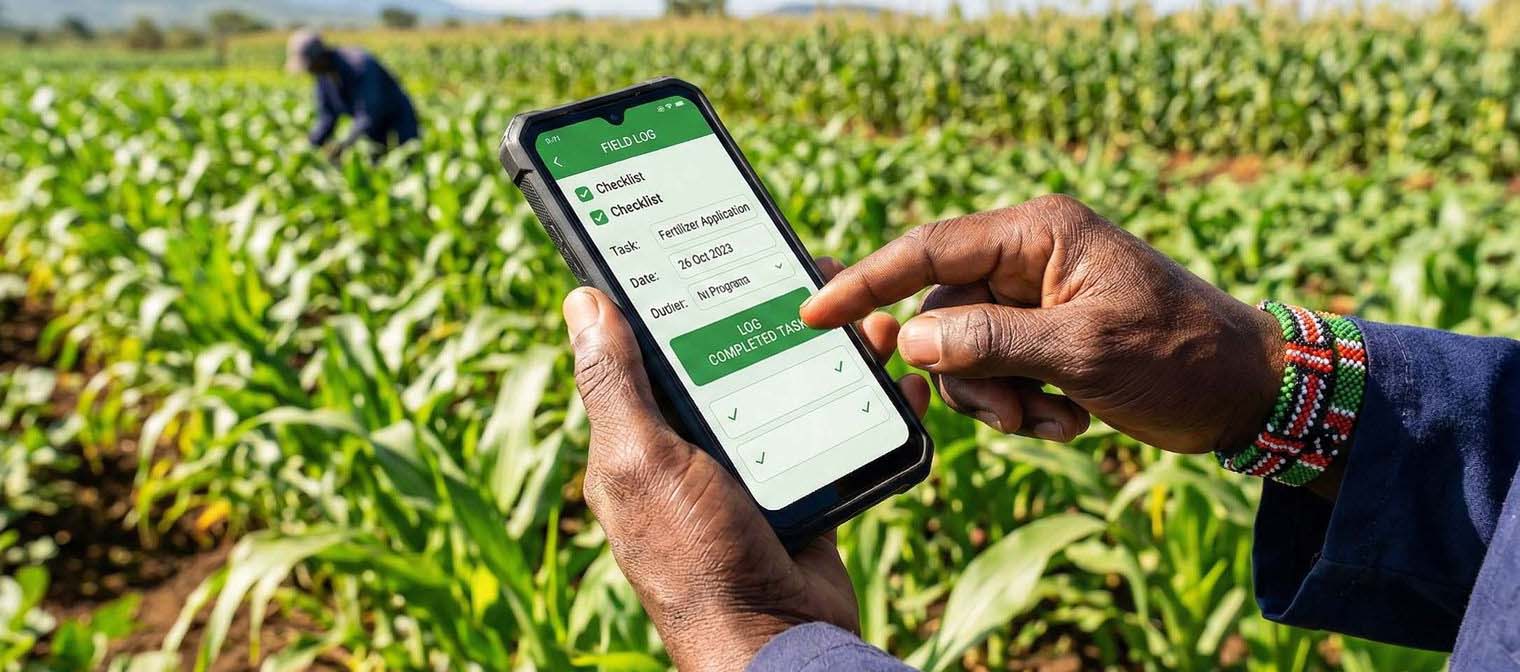
That’s where farm software helps. You can enter data right on your phone while sitting in the tractor. The app does the heavy lifting for you.
📊 By the Numbers: Research shows that farmers who start keeping structured financial records see up to a 149 percent jump in farm income. Tracking exact costs helps them cut out wasteful spending entirely.
You have to know your exact cost per head or cost per acre. A solid financial management system ties your feed bills, vet costs, and labor directly to specific parts of your farm. That gives you the hard numbers you need to succeed.
What Types of Farm Records Do You Need?
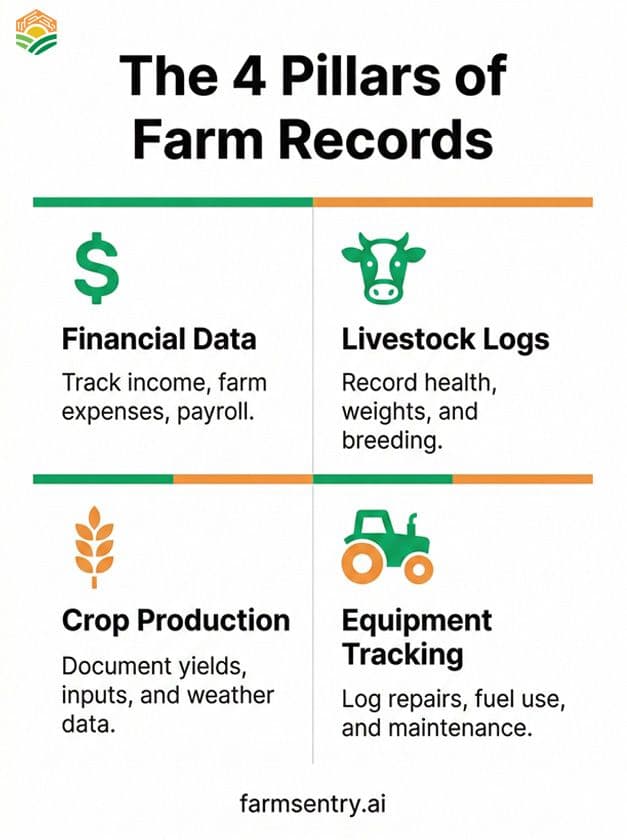
You basically need four types of records to run a solid farm business. You need financial logs for taxes, production data for crops, livestock histories for animal health, and equipment logs for maintenance. Tracking all these categories gives you the full picture.
1. Financial Records
Your financial records hold the whole farm together. You have to track every dollar coming in and going out. This includes:
Gross sales from crops and livestock.
Variable costs like seed, feed, and fertilizer.
Fixed costs like land rent and insurance.
Payroll for your workers.
2. Livestock and Herd Records
If you run cattle or other animals, you need to track their lives closely. This helps with breeding success and food safety. Make sure you track:
Birth dates and weaning weights.
Average daily weight gain.
Veterinary treatments and medicine batch numbers.
Death losses and causes.
Tracking animal health on paper gets messy fast. Digital tools let you set quick reminders and pull up full histories right away. Using livestock management tools automates your herd tracking. You won’t miss a vaccination date again.
3. Production and Agronomic Records
Production records prove exactly how much you grew and how you did it. You should always log:
Planting dates and seed varieties.
Exact chemical and fertilizer application rates.
Harvest dates and total crop yields.
Daily weather conditions.
4. Equipment and Maintenance Logs
Tractors and harvesters cost a fortune. Keeping detailed maintenance logs protects that heavy investment. You need to record:
Routine oil changes and repairs.
Fuel consumption.
Sanitation logs for food safety audits.
🎯 Key Takeaway: You can’t manage what you don’t measure. Tracking these four areas gives you real control over your farm.
How Do I Set Up a Good Farm Record System?
You can set up a great record system by picking the right software and building a simple daily habit. Enter your field data right away. Log your expenses weekly. And always keep your farm bank account separate from your personal money.
Switching to a new system feels like a lot of work at first. But if you take it one step at a time, you’ll see the benefits almost overnight. Follow these steps to build a system that actually works for you.
Step 1: Choose Your Digital Tool
Pick a farm management platform that fits your specific operation. Look for software that works easily on your smartphone. That saves you from typing in every single feed receipt.
Step 2: Separate Your Finances
Open a dedicated business checking account just for the farm. Never buy your family groceries with the farm debit card. And never buy tractor parts on your personal credit card. Keeping that money separate is the golden rule of farm accounting.
Step 3: Record Data Immediately
Our memories aren’t perfect. If you wait until the end of the month to write down what you did, you’ll forget important details.
✅ Best Practice: Record your data the moment it happens. Log your chemical spraying before you even pull out of the field.
Don’t wait until Friday to write down what you did on Monday. Use an activity logging tool on your phone. You can record tasks, feeding schedules, and labor hours right from the tractor cab.
Step 4: Review Weekly
Block out thirty minutes every Friday morning to review your records. Check your bank balances. Make sure you’ve uploaded all your receipts. This quick weekly habit prevents massive headaches come tax time.
Common Record Keeping Mistakes to Avoid
Even older, experienced farmers make mistakes when they manage farm record keeping. Avoiding these common traps keeps your business safe and profitable.
⚠️ Common Mistake: The biggest mistake I see is treating the whole farm as one giant bucket of money.
You have to track your income and expenses by specific enterprise. If you grow corn and raise cattle, you need to track them separately. A great corn harvest might be hiding a cattle herd that bleeds money. If you mix all those numbers together, you’ll never spot the problem.
Another common error is ignoring equipment depreciation. Tractors lose value every single year. If you don’t record that loss, you’ll pay way too much in taxes. You’ll also find yourself short on cash when that old tractor finally dies.
Finally, a lot of folks fall behind on regulatory records. If you spray restricted chemicals, you have to log the exact weather, wind speed, and application rate. If a neighbor complains about chemical drift, your spray logs are your only legal defense.
💡 Pro Tip: Keep your farm records for at least three to seven years. Tax agencies and crop insurance auditors often request old data long after the harvest is over.