How to Choose Land for Coffee Farming: A Site-Selection Playbook for Commercial Operators | FarmSentry Blog | FarmSentry
Written by Claud Fields
May 11, 2026May 11, 2026
15 min read
Coffee
How to Choose Land for Coffee Farming: A Site-Selection Playbook for Commercial Operators
In short
Choosing the wrong land for coffee is a 30-year mistake. This playbook covers every variable that determines whether a site will produce profitable, market-ready coffee or become a stranded asset. ---
Introduction
Picture this: you buy 50 hectares with great views and a fair price. Two years after planting, yields are half of what you projected. The soil pH is wrong, the dry season never triggers uniform flowering, and the road to your nearest dry mill turns to mud for four months every year.
This happens more than the industry admits.
Coffee farm site selection is the single most important decision a commercial operator, estate investor, or cooperative manager makes. Get it right and every agronomy decision downstream gets easier. Get it wrong and no amount of fertilizer, selective picking, or specialty branding fixes the problem.
I’ve seen farms that looked perfect on paper fail because nobody checked the seasonal rainfall pattern. I’ve seen others succeed in seemingly marginal conditions because the operator did the homework first. This playbook covers what you need to know before you sign anything.
Here’s what we’ll work through:
Agroecological foundations: temperature, altitude, rainfall, and soil requirements for Arabica, Robusta, and emerging species
Climate risk: what’s already changing and how to factor it into land decisions
Due diligence: the legal, logistical, and environmental checks operators skip at their peril
Farm and market fit: how sourcing model, labor supply, and traceability requirements shape site value
What Makes a Coffee Farm Site Commercially Viable?
Coffee farm site selection is the process of matching a specific parcel of land to the biological requirements of the coffee species you intend to grow, while also accounting for market access, regulatory compliance, and long-term climate resilience. A commercially viable site must satisfy all three layers: agronomic suitability, operational feasibility, and market defensibility.
No single factor determines viability on its own. A site can have perfect volcanic soil and still fail if it lacks reliable harvest labor or sits in a low-lying zone that will lose Arabica suitability within a decade.
How Do Altitude, Temperature, and Rainfall Affect Coffee Quality?
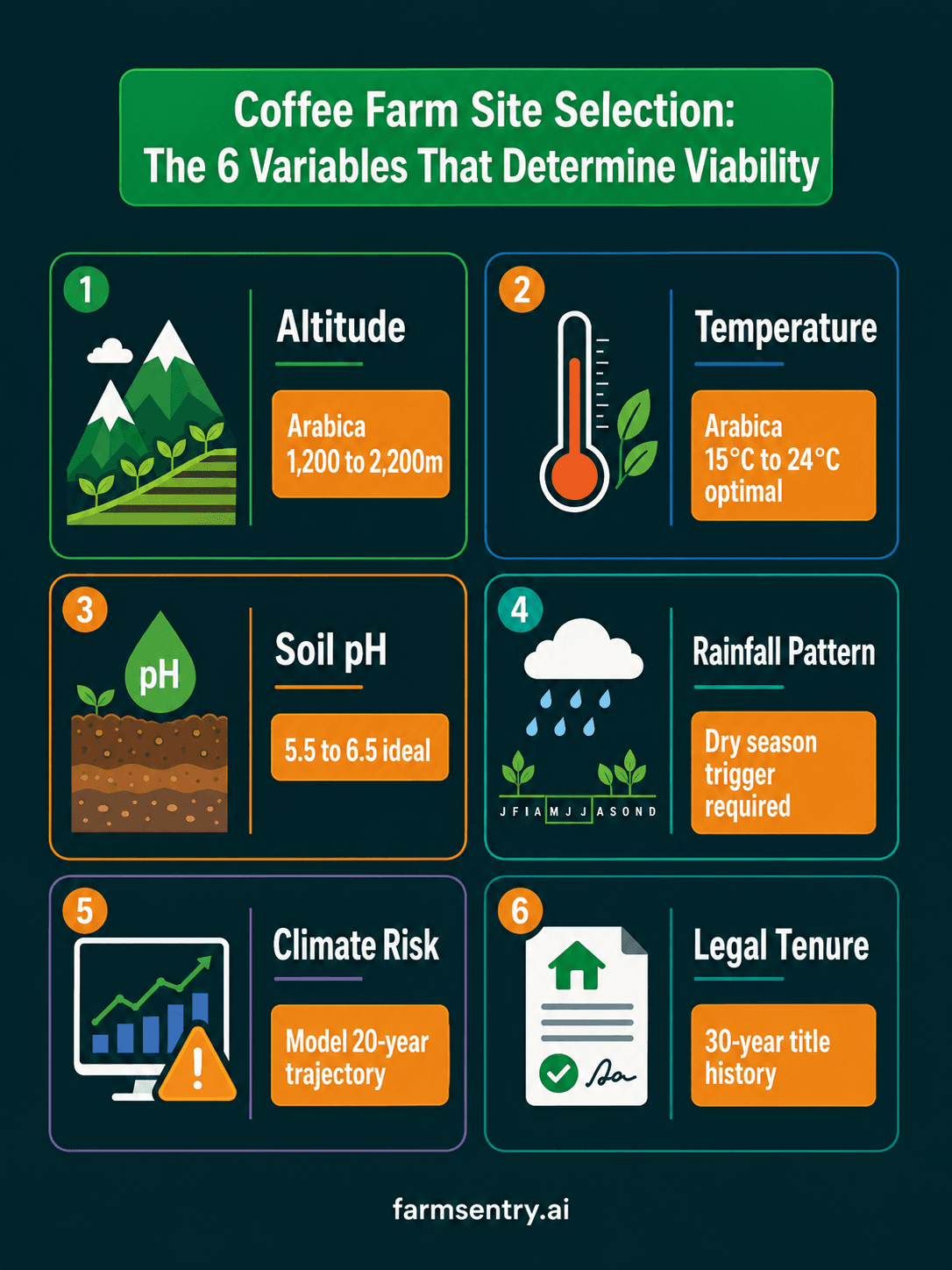
The short answer: Coffea arabica performs best between 1,200 and 2,200 meters above sea level, where mean temperatures stay between 15°C and 24°C. That slow, cool maturation window lets complex sugars and organic acids build up in the cherry, which is what creates dense, high-scoring green beans.
Temperature is the master variable. Everything else interacts with it.
When mean temperatures exceed 24°C, arabica cherries ripen too fast. You get low-density, “puffy” beans that lack the structural integrity needed for roasting. At the other extreme, temperatures below 15°C slow growth to the point where yields collapse. The optimal metabolic window is narrow, and it’s getting narrower as the climate shifts (FAO, 2001).
Altitude is how most producing regions approximate temperature control. Higher elevation generally means cooler nights and a longer maturation cycle. But elevation alone isn’t the whole answer. Aspect, canopy cover, and proximity to large bodies of water all modify the actual temperature a coffee tree experiences on any given day.
Robusta tells a different story. Its optimal range is 24°C to 30°C, with productive plantations typically sitting between 200 and 800 meters above sea level. Robusta is more thermally tolerant, but recent research confirms that temperatures above 34°C during the bean-filling stage still reduce yields and cup quality, challenging the long-held belief that Robusta thrives in any warm conditions (World Coffee Research, 2024).
Rainfall distribution matters more than total volume. Arabica requires 1,200 to 2,200 mm per year, but the timing is what really counts. Coffee needs a distinct dry period of three to four months to trigger dormancy in the flower buds. The first rains after that dry spell, the “trigger rains,” initiate a synchronized blossom. Without that seasonal rhythm, flowering becomes asynchronous. One branch carries blossoms, green cherries, and ripe fruit at the same time, which makes selective hand-picking expensive and harvest windows unpredictable.
🎯 Key Takeaway: Don’t evaluate altitude in isolation. Check the confirmed mean temperature at your site and map the rainfall calendar before you plant.
What Soil Properties Should You Test Before Buying Coffee Land?
The short answer: Coffee is an acidophilic crop, meaning it thrives in acidic soil. The ideal pH range is 5.5 to 6.5. Volcanic or basalt-derived soils with high organic matter, good drainage, and a cation exchange capacity (CEC) above 12 meq/100g are the global benchmark for high-quality coffee production.
Soil is where terroir is expressed. The finest origins in the world, from the volcanic highlands of Colombia to the “Bazan Red” lands of Vietnam’s Central Highlands, share one thing: deep, friable soils derived from volcanic parent material. These soils hold moisture without waterlogging, drain freely, and release nutrients in a bioavailable form across the crop’s growth cycle.
pH is the most critical chemical constraint. When soil pH drops below 5.0, aluminum and manganese become toxic. Root development stalls. New leaves show “tip burn.” When pH rises above 7.0, micronutrients like iron and zinc become chemically locked and unavailable, causing interveinal chlorosis and reduced plant vigor. Neither extreme is recoverable without significant and ongoing amendment costs (FAO, 2001).
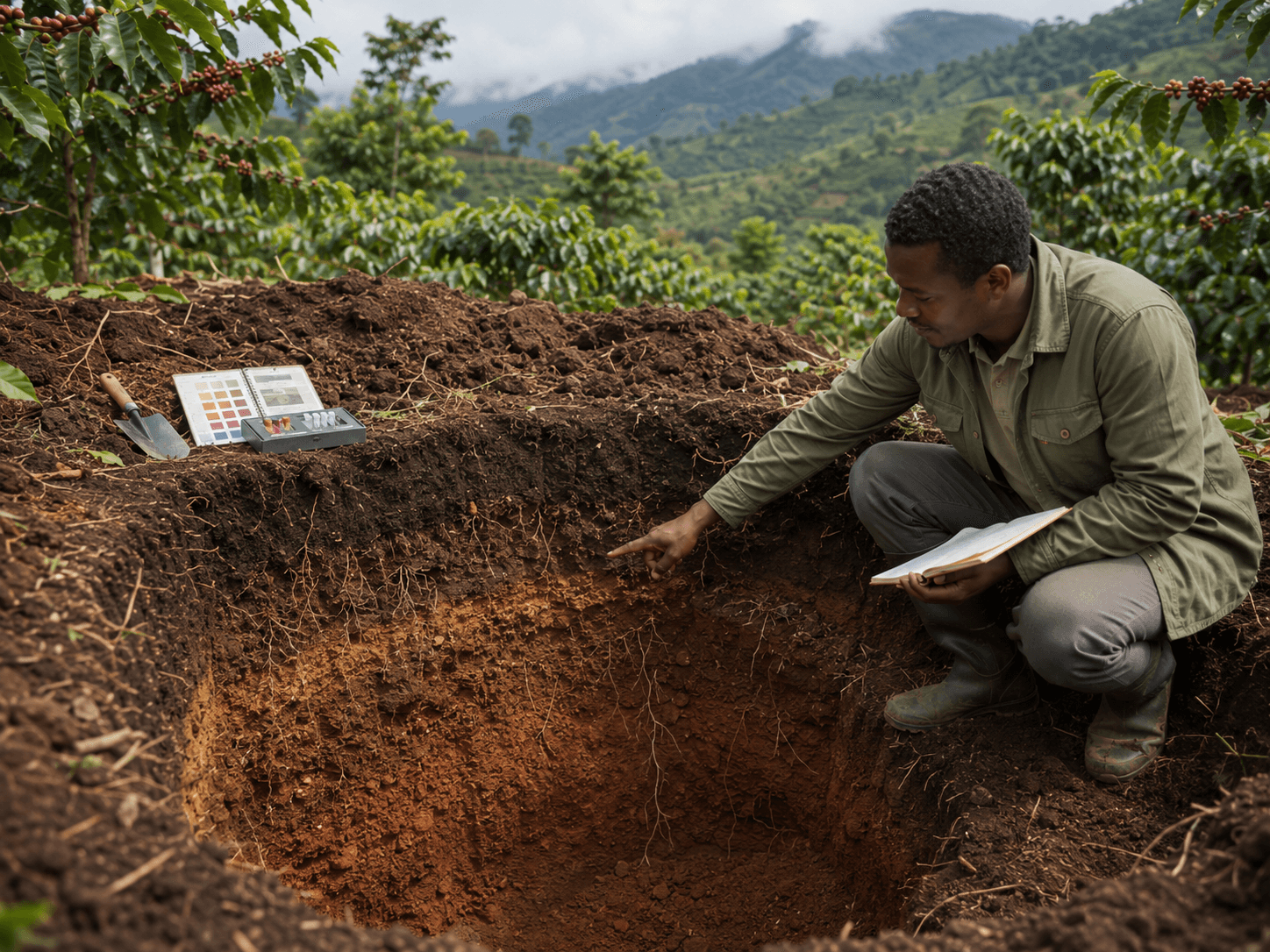
Before any land acquisition, run these soil assessments:
Soil pits to 1.5 to 3 meters: Look for restrictive clay pans, rocky layers, or high water tables that will limit root development
pH analysis across multiple grid points: A single composite sample misses spatial variability that can run two full pH units across one block
Texture and drainage test: Feel the soil structure and conduct a percolation test; waterlogged roots are the fastest path to root rot and tree loss
Organic matter and CEC: High organic matter buffers pH, feeds soil biology, and holds moisture between rainfall events
Macronutrient baseline: Test for nitrogen, phosphorus, and potassium as a baseline for your fertilizer program
⚠️ Common Mistake: Operators often run one pooled soil sample across an entire farm. Micro-variation in pH and nutrient levels within a single property can be dramatic, especially on sloped terrain where topsoil depth and drainage patterns change significantly over short distances.
How Do You Assess Water Availability for a Coffee Farm?
The short answer: Evaluate both water volume and water quality. You need enough clean water to meet peak irrigation demand in drought years and enough treatment-grade water for wet-mill fermentation and washing. A water assay should test pH, microbial load, and hardness before any significant investment.
Water is the variable most operators underestimate until they run a wet mill.
For irrigation, map your rainy and dry seasons against the crop calendar. Sites that rely entirely on rainfall are viable where the seasonal pattern is reliable. Where dry spells extend beyond four months or drought frequency is increasing, you need access to a river, groundwater, or reservoir with a confirmed legal water-use permit.
For processing, water quality directly affects cup quality. Hard water with high mineral content can interfere with fermentation chemistry. Contaminated water introduces off-flavors and hygiene risk. Test your source before you build infrastructure around it.
✅ Best Practice: Require a water assay as a non-negotiable condition of any land deal that includes wet-processing infrastructure. Test for pH, microbial load, and mineral hardness. Then check the permitting situation: in many producing regions, industrial water-use licenses carry long lead times and are not guaranteed.
How Should You Document Site Data to Protect Your Investment?
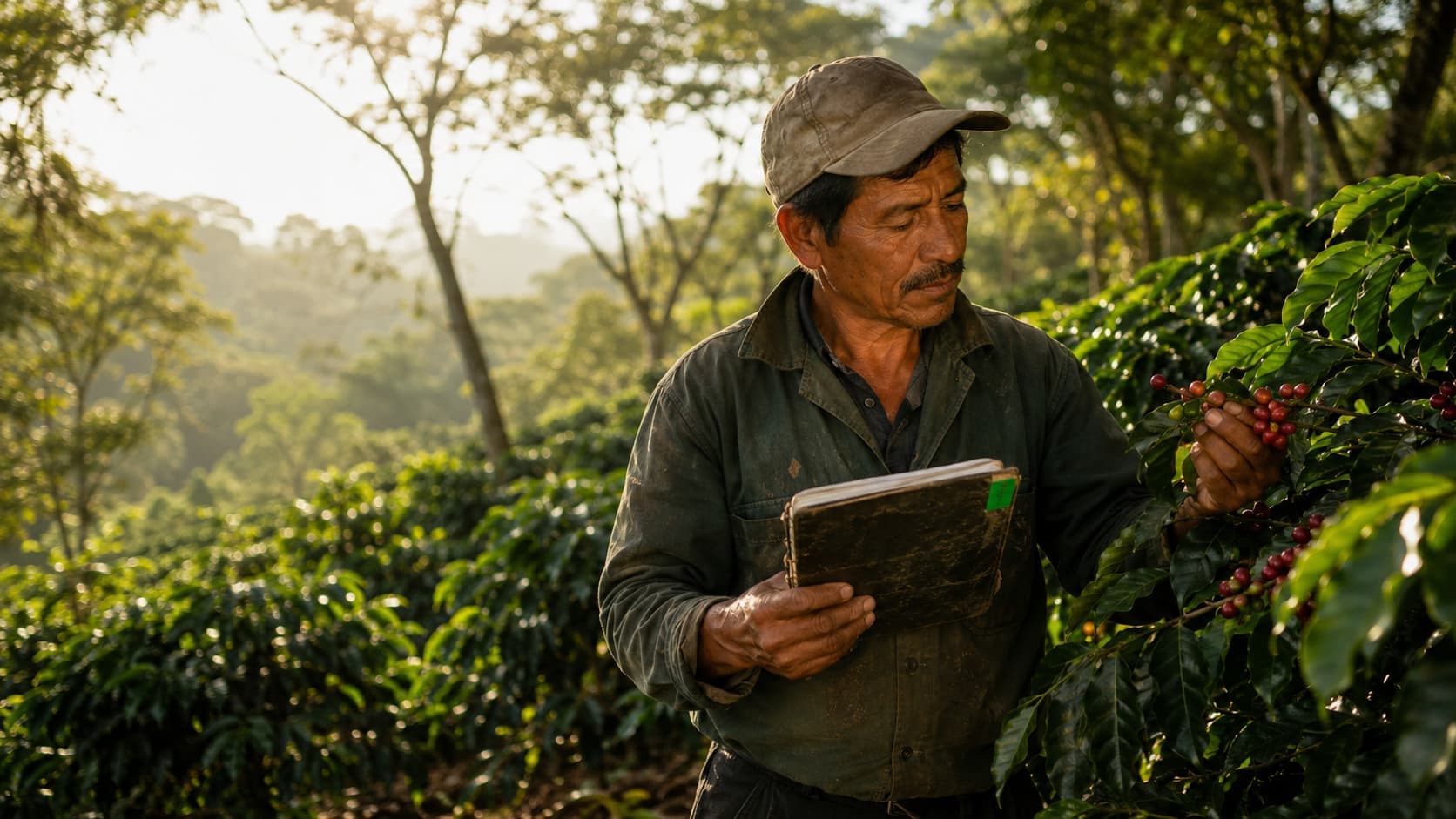
Collecting field data in notebooks or spreadsheets creates a fragile record. Soil test results, rainfall logs, GPS-tagged block boundaries, and historical yield data need to live in a structured, searchable format that you can share with buyers, lenders, and certification auditors without recreating the file from scratch every time.
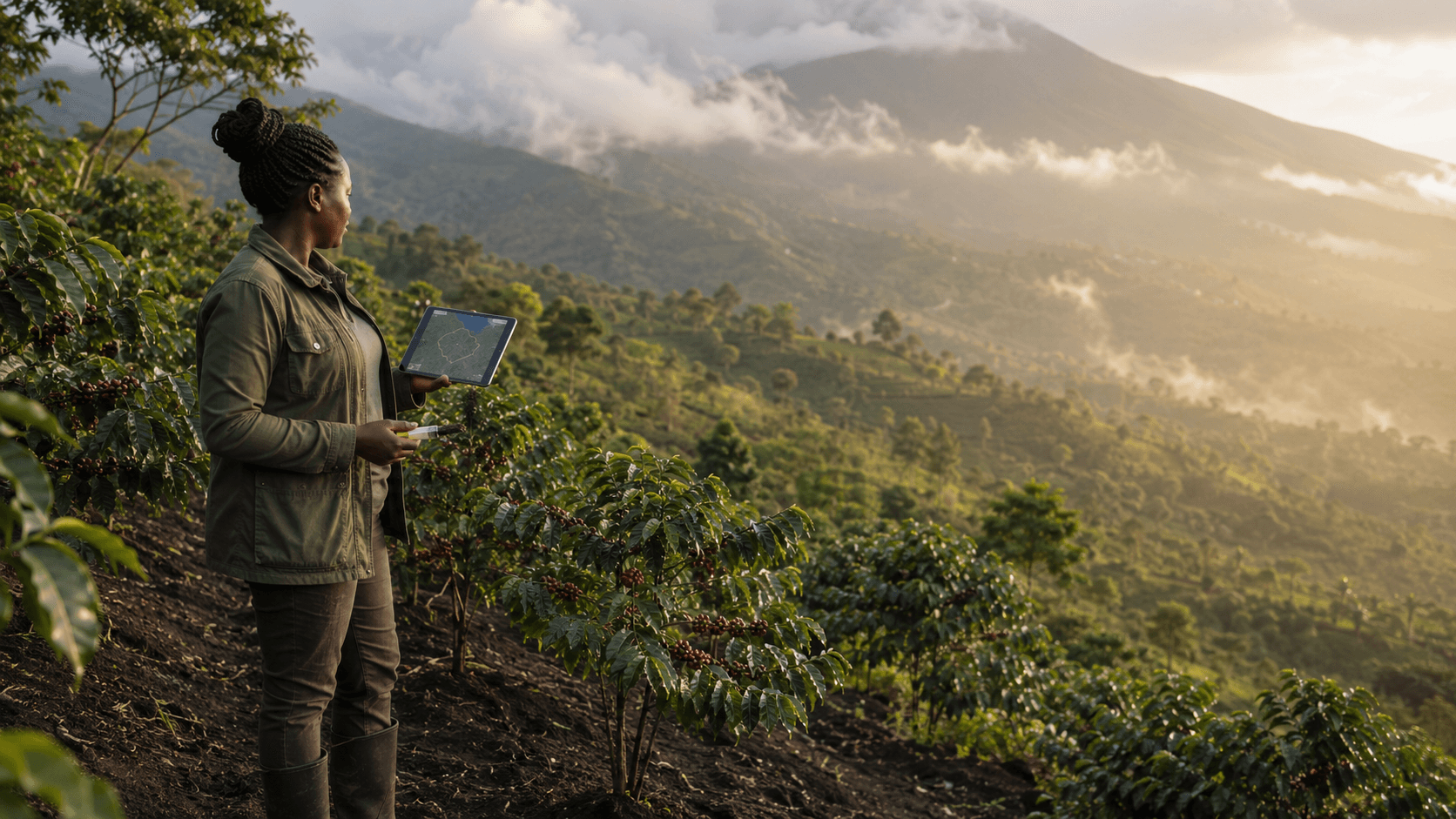
This is exactly the problem that FarmSentry’s dashboard and activity logging tools are built to solve. You can log soil test results, rainfall readings, and GPS-tagged parcel data by block, then pull that history into a report for any stakeholder who asks. Every data point is timestamped, attributed, and exportable. When a European roaster asks for plot-level traceability documentation, you’re not scrambling: you have a defensible digital site file ready to share.
💡 Pro Tip: Start building your digital site record before you close the land deal. The soil tests, water tests, GPS coordinates, and labor assessments you conduct during due diligence are the first entries in what becomes your farm’s most valuable compliance and commercial asset.
What Climate Risks Should You Plan For Before Planting?
The short answer: The three highest-priority climate risks for coffee farm site selection are thermal migration (rising temperatures pushing suitability upward in altitude), fungal pathogen expansion (particularly coffee leaf rust), and hydrological extremes, including both drought and high-intensity rainfall events that destabilize slopes and processing infrastructure.
Climate risk isn’t a future concern. It’s an operational reality right now, and it needs to be priced into every land acquisition decision.
Thermal migration: Researchers project that approximately 50% of currently suitable Arabica-producing land could become untenable by 2050 due to rising temperatures (World Bank, 2024). In practice, this means sites at the lower elevation band of any production zone, typically below 1,200 meters for Arabica, carry structural risk that only increases with time. In Colombia, producers are already moving cultivation upward by 300 to 500 meters to maintain optimal temperature regimes (GCA, 2024). If you’re evaluating land at the lower edge of a producing zone, factor in not just today’s suitability but where that site sits in a 20- to 30-year thermal trajectory.
Fungal pathogens: The coffee leaf rust crisis of 2012 to 2013 in Central America was partly climate-driven. Higher temperatures shortened the pathogen’s incubation period, allowing Hemileia vastatrix to infect high-altitude plantations that had previously been protected by cool nights (World Bank, 2024). When evaluating a site, check which varieties dominate locally, whether rust-resistant genetics are available from local research programs, and what the historical incidence of leaf rust, coffee berry borer, and other primary pests looks like.
Hydrological extremes: Prolonged drought causes stomatal closure and oxidative stress that permanently reduces photosynthetic capacity. Excessive rainfall on Andean slopes increases the frequency and severity of landslides, destroying trees and the processing infrastructure required to move fresh cherry to the mill. When assessing a site, evaluate both the rainfall record and the slope stability. Slopes above 30 degrees carry escalating erosion risk, and mechanization becomes impossible above 15 degrees, driving up selective-picking costs at the same time.
📊 By the Numbers: A meta-analysis of 68 studies found that agroforestry interventions reduce climate-related yield loss by up to 22% and pest incidence by up to 18% in coffee production systems (Frontiers in Climate, 2025). Shade trees reduce canopy temperatures by 2°C to 4°C, buffer erratic rainfall, and are now essential for satisfying deforestation-free sourcing mandates.
✅ Best Practice: Build your agroforestry design in from the start. Don’t treat shade trees as a future retrofit. The structural and regulatory benefits are highest when shade canopy grows alongside the coffee.
What Legal and Logistical Checks Are Non-Negotiable in Coffee Land Due Diligence?
The short answer: A minimum due-diligence process covers four areas: legal tenure and chain of title, environmental site assessment for prior contamination, agricultural zoning confirmation, and a logistical analysis that includes road access, distance to the nearest processing facility, and seasonal labor availability.
Skipping these checks creates liabilities that surface years after planting, when remediation costs far exceed what the due diligence would have cost.
Legal tenure: In many coffee-growing regions, land title is informal or contested. Run at minimum a 30-year chain-of-title search to identify prior ownership claims, heir disputes, or community-use rights. Verify that the parcel’s agricultural zoning permits the construction of wet mills, drying facilities, and employee housing. If those uses aren’t confirmed in writing, your processing infrastructure could face a “non-conforming use” challenge after you’ve already built it.
Environmental assessment: If the land was previously used for high-input conventional agriculture, conduct a Phase I environmental assessment to identify recognized contamination concerns. If anything flags, proceed to Phase II soil and water testing before closing. A site that requires remediation to meet organic or Rainforest Alliance certification standards is a site where your certification economics don’t work as planned.
The proximity factor: A site with perfect terroir is commercially unviable if it sits more than two hours from a paved road or lacks access to a central dry port. Map the route from farm gate to the nearest primary road, dry mill, and export hub. Model what that logistics cost does to your cost-per-kilo at various yield scenarios.
Labor: During a three-month peak harvest window, a 50-hectare Arabica estate may need 200 to 400 selective hand-pickers. If no local housing infrastructure exists, or if competing crops pay higher daily wages, your harvest cost model breaks. Survey local wage benchmarks and housing availability before you build your financial projections.
Here’s the thing: knowing your true cost per kilogram, including annualized land cost, labor, inputs, processing, and logistics, is the difference between guessing and managing. FarmSentry’s financial management tools let you track income and expenses by block and by season, so your cost-per-kilo calculation is grounded in real operational data rather than back-of-envelope estimates.
How Does Traceability Regulation Change Site-Selection Decisions?
The short answer: Under the EU Deforestation Regulation (EUDR), coffee entering the European market must be linked to GPS coordinates and mapped plot boundaries for every individual production unit. This means any site you acquire, lease, or source from must be geospatially documentable from day one.
Traceability has moved from a marketing differentiator to a legal requirement. As of 2025, operators sourcing for the EU market must conduct legal due diligence confirming that the coffee was not produced on deforested land (CBI, 2025). This requires plot-level GPS data, land-cover history for the parcel, and a documented supply-chain audit.
For estate operators, this means GPS mapping of every block during the site-assessment phase, not as an afterthought after planting. For cooperative managers and aggregators, it means building the data infrastructure to collect and verify GPS data from potentially hundreds of smallholder members before the first shipment leaves port.
The economic reality of smallholder supply chains adds urgency. Smallholders produce approximately 70% of the world’s coffee on plots averaging less than two hectares. Their operations are often characterized by unpaid family labor that’s not reflected in any cost model, which means their profitability is often illusory when fully accounted for (Solidaridad Network, 2024). Operators building sourcing models around smallholder aggregation need to factor the cost of traceability infrastructure into their partnership terms.
🔍 Definition: EUDR (EU Deforestation Regulation): A European Union law requiring companies placing certain commodities, including coffee, on the EU market to verify that those products were not produced on land deforested after December 31, 2020, and to provide geospatial data confirming the production location.
Conclusion and Action Plan
Coffee farm site selection is a 30-year commitment made in a single transaction. The decisions you make before planting set the ceiling on everything that follows: agronomic performance, processing quality, certification eligibility, and the commercial relationships you can build.
Three things to remember:
- Species and altitude must match. Arabica between 1,200 and 2,200 meters with cool mean temperatures is the specialty benchmark. Robusta in warm, humid lowlands with high-yield clones is a different, viable strategy. Don't mix the requirements.
- Climate risk is priced into the land, whether you price it or not. Lower-elevation sites in warming zones carry structural risk. Agroforestry design is not optional for climate resilience.
- A defensible digital site record is a commercial asset. Soil tests, GPS boundaries, water assays, and yield baselines are what buyers, auditors, and lenders increasingly require before they engage.
Your next steps:
1. Map the GPS boundaries of every parcel you're evaluating and overlay them with published climate suitability models for your target species.
2. Conduct soil pits to 1.5 meters and pH testing across a grid before closing any deal.
3. Obtain a water assay and confirm water-use permit status for any site that requires irrigation or wet-mill operations.
4. Run a 30-year chain-of-title search and confirm agricultural zoning for all intended land uses.
5. Build your digital site file now, before planting, so that every subsequent agronomic and commercial decision is grounded in documented baseline data.
2. FAO. (2001). Chapter 1: Coffee plant and site selection. Arabica coffee manual for Lao PDR. Food and Agriculture Organization of the United Nations. Available at: https://www.fao.org/4/ae939e/ae939e03.htm [Accessed: 6 May 2026].