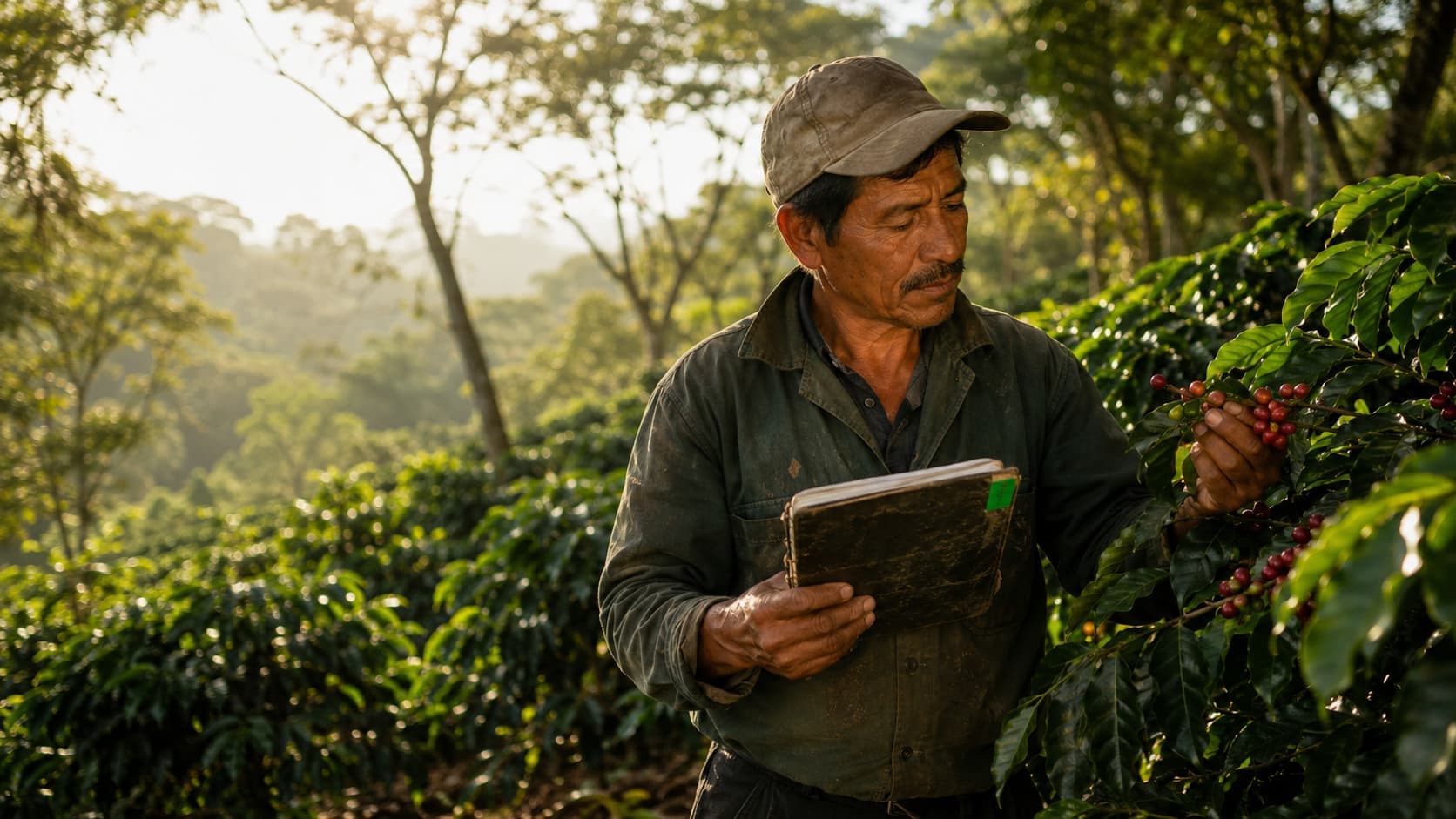
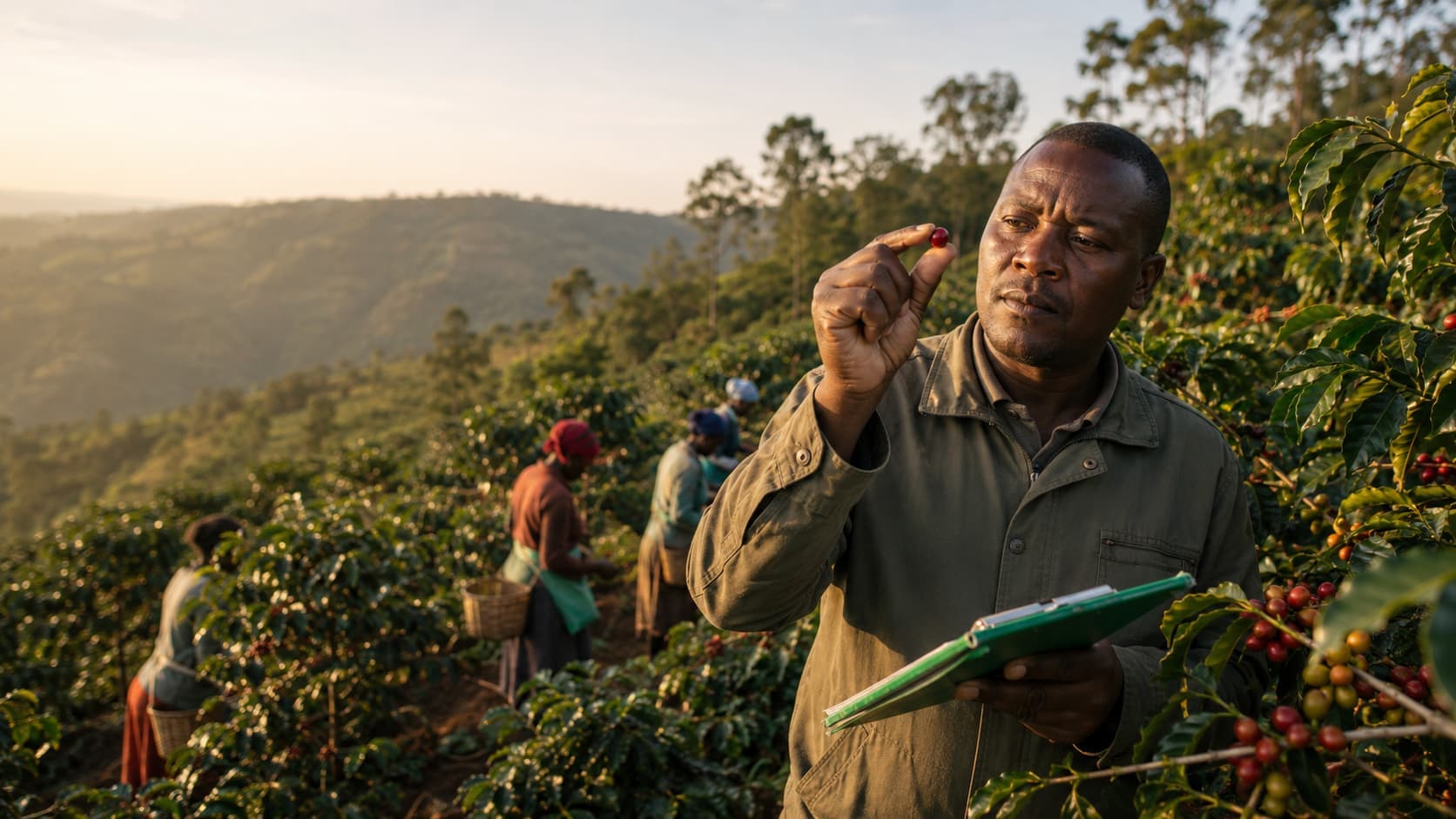
How to Manage Arabica Coffee Trees in Years 2-3 (and Build a 40-Year Harvest) | FarmSentry Blog | FarmSentry
Written by Claud Fields
May 6, 2026May 6, 2026
11 min read
Coffee
How to Manage Arabica Coffee Trees in Years 2-3 (and Build a 40-Year Harvest)
In short
Years 2-3 are make-or-break for Arabica coffee. Get pruning, nutrition, and pest control right now to build a tree that produces quality coffee for up to 40 years, and avoid permanent yield loss. ---
Introduction
Here's something most extension officers won't tell you straight: a single mistake in Year 2 can cut your coffee yields in half. Permanently.
That's not an exaggeration. The decisions you make right now, before your trees produce a single cherry, set the ceiling for what your farm earns over the next four decades. I've seen farmers in Kenya, Tanzania, Uganda, Rwanda, and Ethiopia all face the same problem. Years 2 and 3 are a cash flow dead zone. Your trees are growing fast, eating up your fertilizer budget, and giving you nothing back yet. It's tempting to skip expensive inputs or just wait and see. That's exactly when most of the serious mistakes happen.
This guide gives you a clear, step-by-step plan to manage Arabica coffee trees in years 2 and 3. We'll cover the right way to prune, what to feed your trees and when, which pests to watch for, why you should strip your year 2 flowers, and how intercropping with bananas can generate real income while your coffee matures. Follow these steps now, and your trees will still be paying you back when your grandchildren are farming this land.
What Is the Most Important Pruning Task in Year 2?
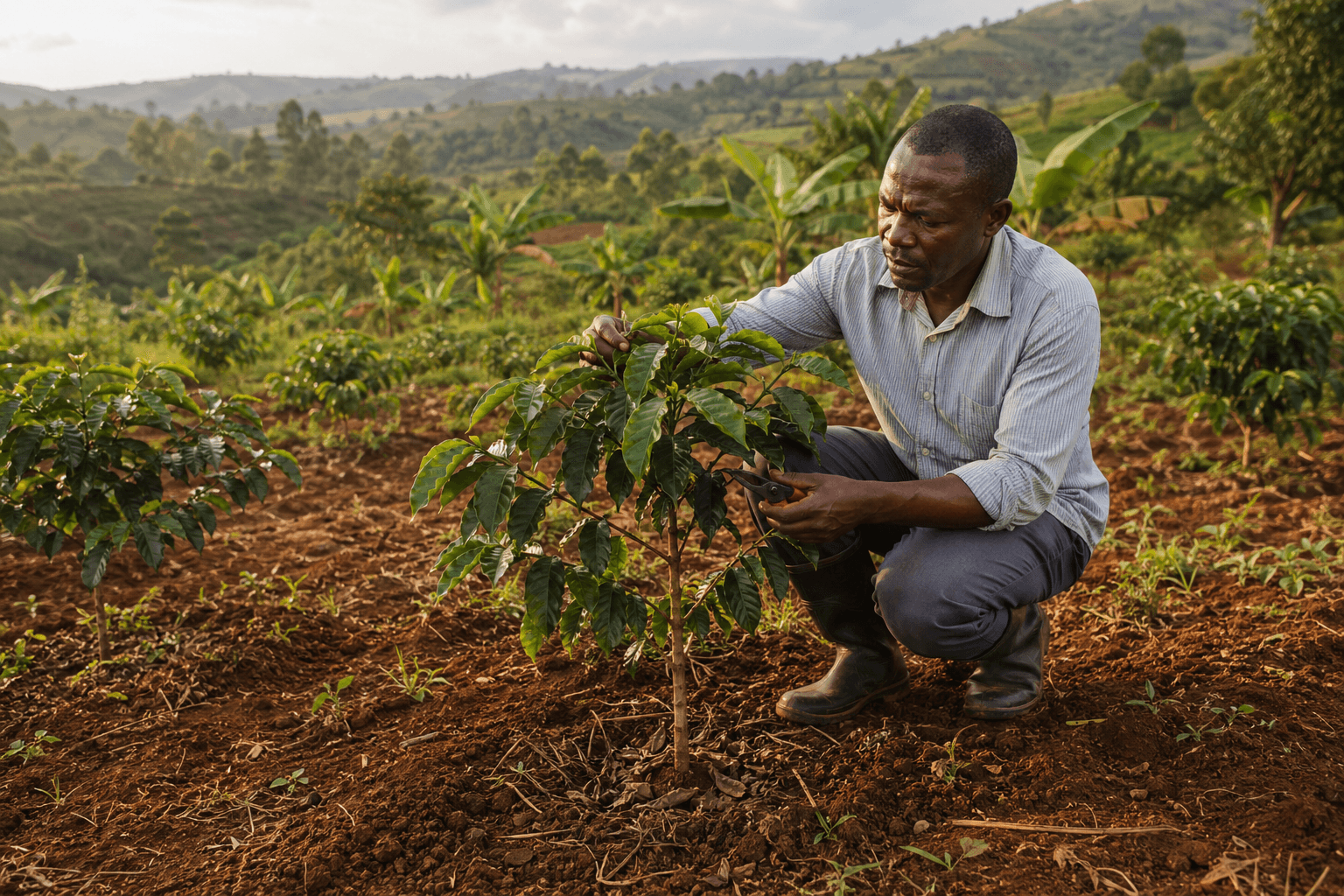
The single most important year 2 pruning task is capping. That means cutting the top of the main stem to force multiple strong branches to grow out and upward. This one cut shapes the tree's permanent structure and decides how much fruit it can carry for its entire life. Get it wrong, and there's no fixing it later.
Capping: The Cut That Shapes Everything
Your tree's structure is set during years 2 and 3. After this window, the permanent framework is locked in.
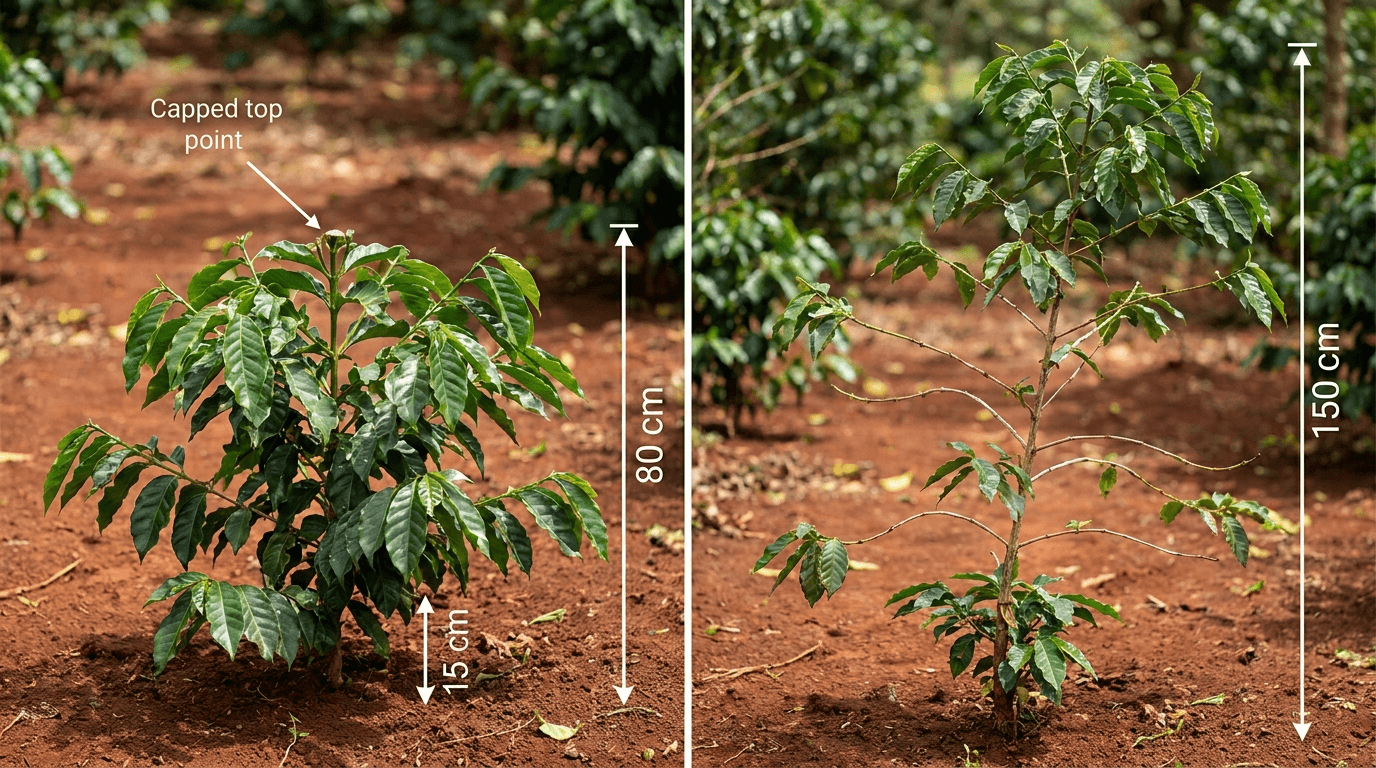
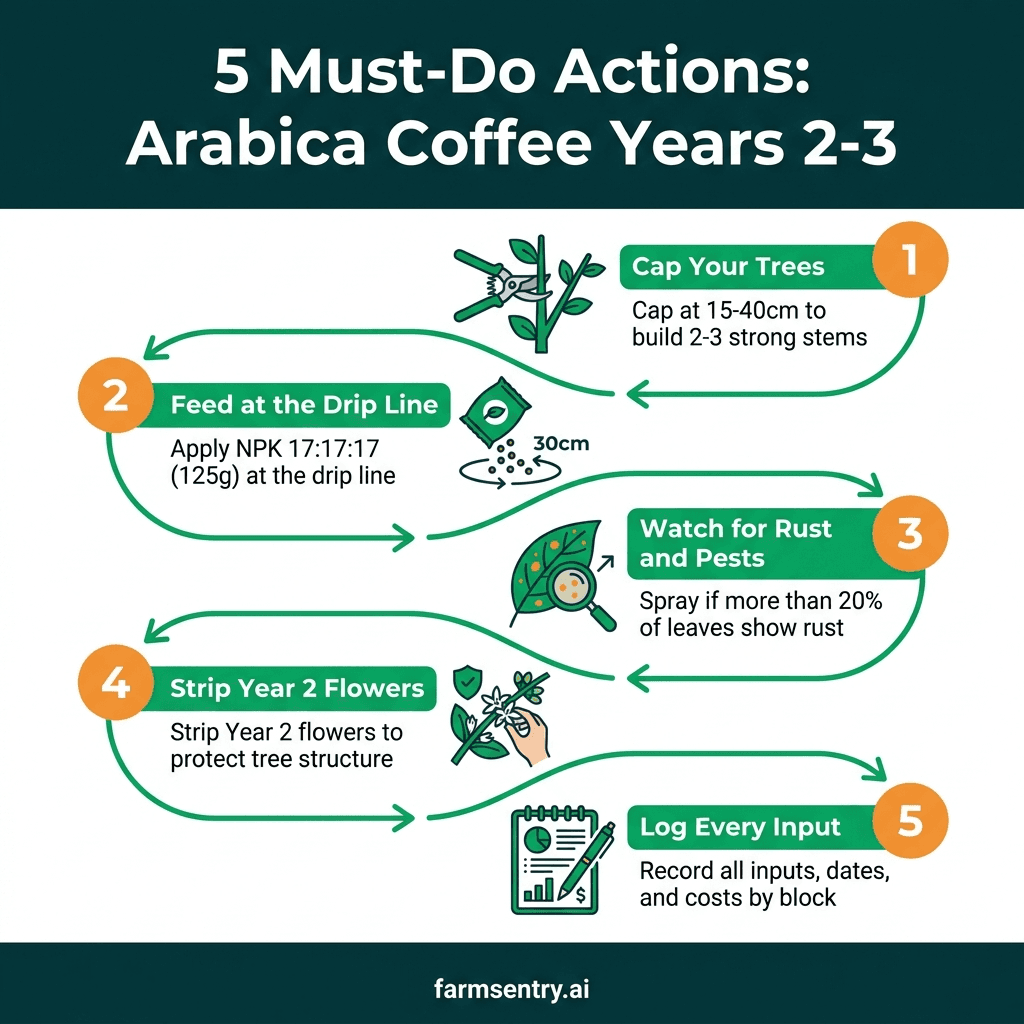
For a multi-stem system, cap the main stem when it reaches between 15 and 40 cm tall. After capping, choose two to three strong, evenly spaced suckers growing from the stem and remove everything else. This stops the tree from splitting under the weight of future harvests.
For a single-stem system, which TaCRI recommends for Tanzania's high-altitude Arabica regions, cut the main trunk back to 110 cm when it reaches 130 cm. Then apply a second cap when the tree grows to 170 cm. This forms a permanent umbrella canopy that's safe and practical to harvest (Source 2).
🎯 Key Takeaway: Cap your trees on time. A tree left to grow freely becomes tall and spindly, with weak lower branches that produce almost nothing.
The 15-Centimeter Skirt Rule
Remove all branches closer than 15 cm to the soil. This cuts the physical pathways that ants use to carry mealybugs onto your tree bark. It's a simple step that protects your young trees from a pest problem that's very hard to reverse (Source 2).
⚠️ Common Mistake: Leaving four or more stems on a young tree feels productive. But it overloads the root system and blocks light from reaching the center of the canopy, which creates exactly the humid conditions that Coffee Berry Disease needs to spread.
✅ Best Practice: Stick to two or three stems per tree. Record every capping date and the number of stems you selected. [FarmSentry's activity logging](/features/activities) lets you log each pruning event by block, so you always know where you are in the formation process.
---
How Do You Feed Arabica Coffee Trees in Years 2 and 3?
To manage Arabica coffee trees in years 2-3, apply 125g of NPK 17:17:17 per tree at the start of the main rains in year 2. Follow that with 100g of Calcium Ammonium Nitrate (CAN) at 18 months. In year 3, apply 300g of CAN or Ammonium Sulphate Nitrate (ASN) per tree each year, split into two or three doses depending on your rainfall pattern.
Apply Fertilizer in the Right Place
Never put fertilizer against the trunk. It burns the bark and causes collar rot. Apply it in a ring starting at the drip line, which is the outer edge of the canopy, at least 30 cm wide. That's where the feeder roots are actually absorbing nutrients (Source 9).
Apply 20 to 40 liters of well-decomposed manure or composted coffee pulp per tree each season. Put it in a shallow trench about one month before the rains start. Early application gives the manure time to break down before the roots need it.
📊 By the Numbers: Labor makes up 50 to 60% of the total cost of producing coffee. That makes precise, efficient fertilizer application one of the most important economic decisions on your farm (Source 14).
💡 Pro Tip: Foliar sprays, where you spray nutrients directly onto the leaves, are largely wasted for major nutrients like nitrogen, phosphorus, and potassium. The waxy coffee leaf resists absorption. Use foliar application only for trace elements like zinc and boron, or during severe drought when roots can't pull nutrients from dry soil.
Tracking your fertilizer applications by block and by tree keeps your costs visible. A [farm inventory and supplies system](/features/inventory) that records each batch of fertilizer, its application date, and the quantity used helps you catch waste before it drains your budget.
What Pests and Diseases Should You Watch For in Years 2-3?
In years 2-3, the biggest threats to your Arabica coffee trees are Coffee Leaf Rust (CLR), Coffee Berry Disease (CBD), and the Antestia bug. Act when more than 20% of your leaves show orange rust pustules. Prune your canopy to cut humidity and deprive CBD of the moisture it needs to spread.
### Coffee Leaf Rust: Watch Every Leaf
CLR is ranked by farmers across East Africa as the most serious disease threatening their livelihoods. Check your trees regularly. If you see orange, powdery patches on more than 20% of leaves, start a systemic fungicide treatment right away.
Open your tree canopy through pruning. Good airflow and sunlight cut the humidity the fungus needs to grow. It's one of the cheapest interventions you have.
The Antestia Bug and Potato Taste Defect
The Antestia bug is found on nearly 99% of Rwandan coffee farms. It causes the Potato Taste Defect (PTD), a flaw that destroys specialty cup scores and cuts your price at the mill. The good news is that proper canopy pruning, which allows UV light to reach the inner branches, reduces PTD rates to below 1%.
⚠️ Common Mistake: Many farmers believe that resistant varieties like Ruiru 11 and Batian need no spraying at all. That's not true. These varieties resist CLR and CBD, but they're fully vulnerable to stem borers, bacterial blights, and the Coffee Berry Borer.
🔍 Definition: The Coffee Berry Borer is a small beetle that burrows directly into coffee cherries. Climate research shows its population grows 8.5% faster for every 1 degree Celsius rise in local temperature, making it a growing threat across East Africa.
Should You Let Your Coffee Trees Flower in Year 2?
No. Strip the flowers in year 2 and limit fruiting severely in year 3. Allowing a heavy first crop forces the tree to send all its energy into seeds instead of roots and branches. This permanently stunts tree structure and caps your lifetime yield.
Why Flower Stripping Pays Off Later
When a coffee tree sets fruit too early, it pulls all available nitrogen toward the developing seeds. This strips chlorophyll from the leaves, stops photosynthesis, and causes leaf drop. Agronomists call this monocarpic senescence, or early-onset dieback. It can't be reversed.
Think of your trees as long-term investments. Well-managed Arabica trees can stay productive for up to 40 years in East Africa. Protecting their structure in years 2 and 3 pays dividends for decades.
💡 Pro Tip: If your cash flow is truly critical, you can allow a very limited crop in year 3 only. Strip 70% of flowers. Let only a small cluster of central berries develop. And don't judge a variety's cup quality from a year 3 harvest. The root system is still immature, and those beans won't represent the variety's true potential.
How Do Shade and Intercropping Help Young Coffee Trees?
Shade from trees or companion crops buffers young Arabica trees against heat, wind, and erratic rainfall. It also intercepts Coffee Leaf Rust spores before they reach your trees. Keep a minimum distance of 60 cm between any intercrop and the coffee stem. Closer than that, and you're setting up competition for water and nutrients that harms both crops.
The Banana Intercrop Advantage
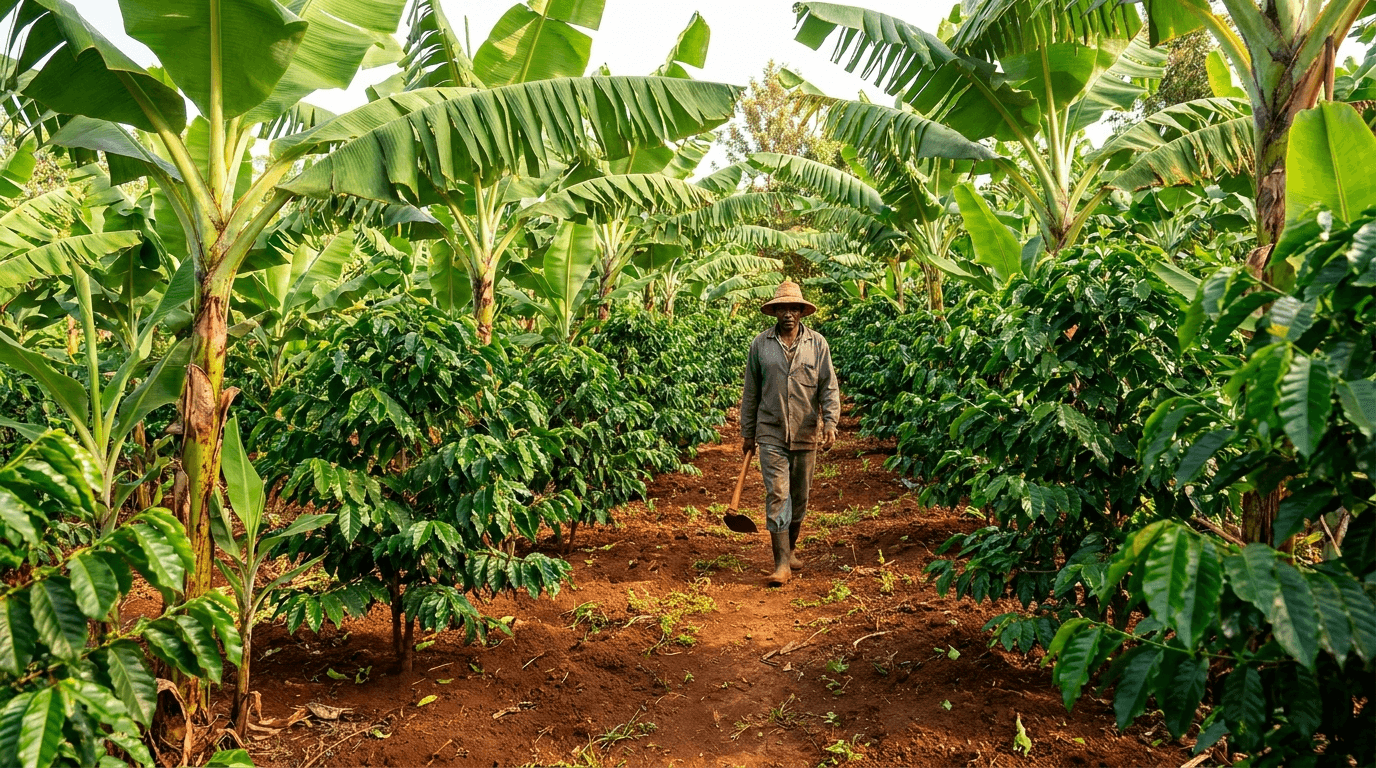
In Uganda's Arabica zones, adding bananas to a coffee plot delivers a 911% Marginal Rate of Return. Coffee yields in well-spaced intercropped plots don't drop significantly compared to monocrops (Source 13). Bananas provide mulch, wind protection, and shade, all while generating cash during the years your coffee isn't bearing yet.
📊 By the Numbers: Climate models predict that full-sun coffee systems will see yields fall by 20 to 60% by 2060. Shaded systems expect a drop of only 4 to 25%. Years 2 and 3 are the time to establish the shade architecture that protects your farm's future.
Plant deep-rooted shade species like Grevillea robusta or Albizia one year before or alongside your coffee seedlings. Prune shade trees just before the rains so they don't block the sunlight your coffee needs during its fastest growth period.
Why Should You Track Costs and Activities in Years 2-3?
Tracking your costs and farm activities in years 2-3 is essential because labor alone represents 50 to 60% of your total cost of production. Without records, you can't see where money is being wasted or which blocks are underperforming. In my experience, farmers who track input timing and costs consistently out-yield and out-earn those who manage by memory.
Use Records to Time Your Inputs
Experienced farmers use the BBCH scale to track their trees' development. It's a standardized numbering system for plant growth stages. For coffee, the key stages include BBCH 59 (flower buds about to open), BBCH 65 (50% of flowers open), and BBCH 73 (cherries in rapid expansion, 7 to 17 weeks after flowering). Knowing exactly when your trees hit each stage tells you exactly when to fertilize, irrigate, and spray.
A notebook works. But a [farm financial management system](/features/financials) that ties fertilizer costs, labor hours, and pest control expenses to specific blocks gives you the real cost-per-acre picture. When you know your true numbers, you make smarter decisions in year 4 and beyond.
🎯 Key Takeaway: Family labor is not free. Price it against local opportunity costs. Farmers who account for all labor correctly find their true profit margins faster, and they make better decisions about where to invest next.
Your Action Plan for Years 2-3
Let's be honest: years 2 and 3 of Arabica coffee management are the most important agricultural window of your farming life. The work you do in these seasons sets the ceiling for every harvest you'll ever take off this land.
Key Takeaways:
- Cap your trees on time, at the right height, and to the right number of stems. Pruning errors in year 2 are permanent.
- Feed your trees precisely: the right fertilizer, the right placement, the right timing. Never fertilize against the trunk.
- Strip your year 2 flowers completely. A short-term sacrifice in years 2 and 3 means much higher yields and quality from year 4 onward.
Your Implementation Roadmap (Start This Week):
1. Walk your field today. Flag every tree taller than 40 cm that hasn't been capped. Cap them this week.
2. Check every tree for branches within 15 cm of the soil. Remove them immediately.
3. Schedule your NPK 17:17:17 application for the start of the next main rains.
4. Put a strip of tape or paint on every tree that flowered early. Strip those flowers within the next 48 hours.
5. Set up a simple notebook or digital log to record every pruning event, fertilizer application, and pest observation by block. Consider using [FarmSentry's activity logging](/features/activities) to keep these records searchable and easy to review at the end of each season.