Coffee Processing Methods Wet Mill: A Complete Quality and Consistency Playbook | FarmSentry Blog | FarmSentry
Written by Claud Fields
June 26, 2026Jun 26, 2026
19 min read
Coffee
Coffee Processing Methods Wet Mill: A Complete Quality and Consistency Playbook
In short
This guide covers every core coffee processing method wet mill operators run: washed, natural, honey, and anaerobic. Get the exact pH, moisture, water activity, and drying targets that separate specialty lots from commercial rejects. ---
Introduction: One Processing Decision Can Make or Break a Season
Here’s a scenario I’ve seen play out more than once. Two neighboring washing stations receive cherry from the same hillside farm on the same morning. Six weeks later, one lot scores 87 points at the cupping table. The other scores 79. Same cherries. Different outcomes.
The difference was process control. That’s it.
That gap is the central challenge of wet mill coffee processing. Fermentation, washing, drying, and storage each have a narrow window of acceptable parameters. Step outside that window and defects follow. Stay inside it, and you get the full potential out of every variety you handle.
Most processing teams carry their knowledge in their hands and noses. That experience is genuinely valuable. But it can’t be transferred, reviewed after the season, or used to set next year’s protocols. When the experienced manager moves on, the institutional knowledge moves with them.
This playbook is built for wet-mill operators, washing-station managers, estate processing teams, and cooperative processors across East Africa and beyond. It covers every major coffee processing method wet mill facilities run today: washed, natural, honey, and advanced anaerobic methods. You’ll find exact pH targets, temperature ranges, drying schedules, moisture limits, and a defect prevention matrix you can pin to your processing floor wall.
By the end, you’ll know how to make processing decisions based on data, not instinct. You’ll also understand how logging that data each season turns this year’s lessons into next year’s quality gains.
What Is the Wet Mill Coffee Processing Method?
The wet mill coffee processing method is the full sequence of post-harvest steps that transform ripe coffee cherry into stable, export-ready green parchment. At a cooperative wet mill, this sequence includes cherry intake, flotation sorting, pulping, fermentation, washing, density grading, drying, and conditioning. The goal at every stage is to remove or degrade the fruit material surrounding the seed while protecting the chemical compounds that create the coffee’s flavor.
The washed process is the foundation of most wet mill operations. But modern mills also handle honey, natural, and anaerobic lots. Each method follows a different path from cherry to parchment. Each creates a distinct cup profile. And each carries its own specific risk profile for defects.
🔍 Definition: “Wet mill” refers to the infrastructure and workflow that handles coffee from cherry delivery through parchment conditioning, before the lot moves to a dry mill for hulling, polishing, and export grading.
What Are the Main Coffee Processing Methods Available at a Wet Mill?
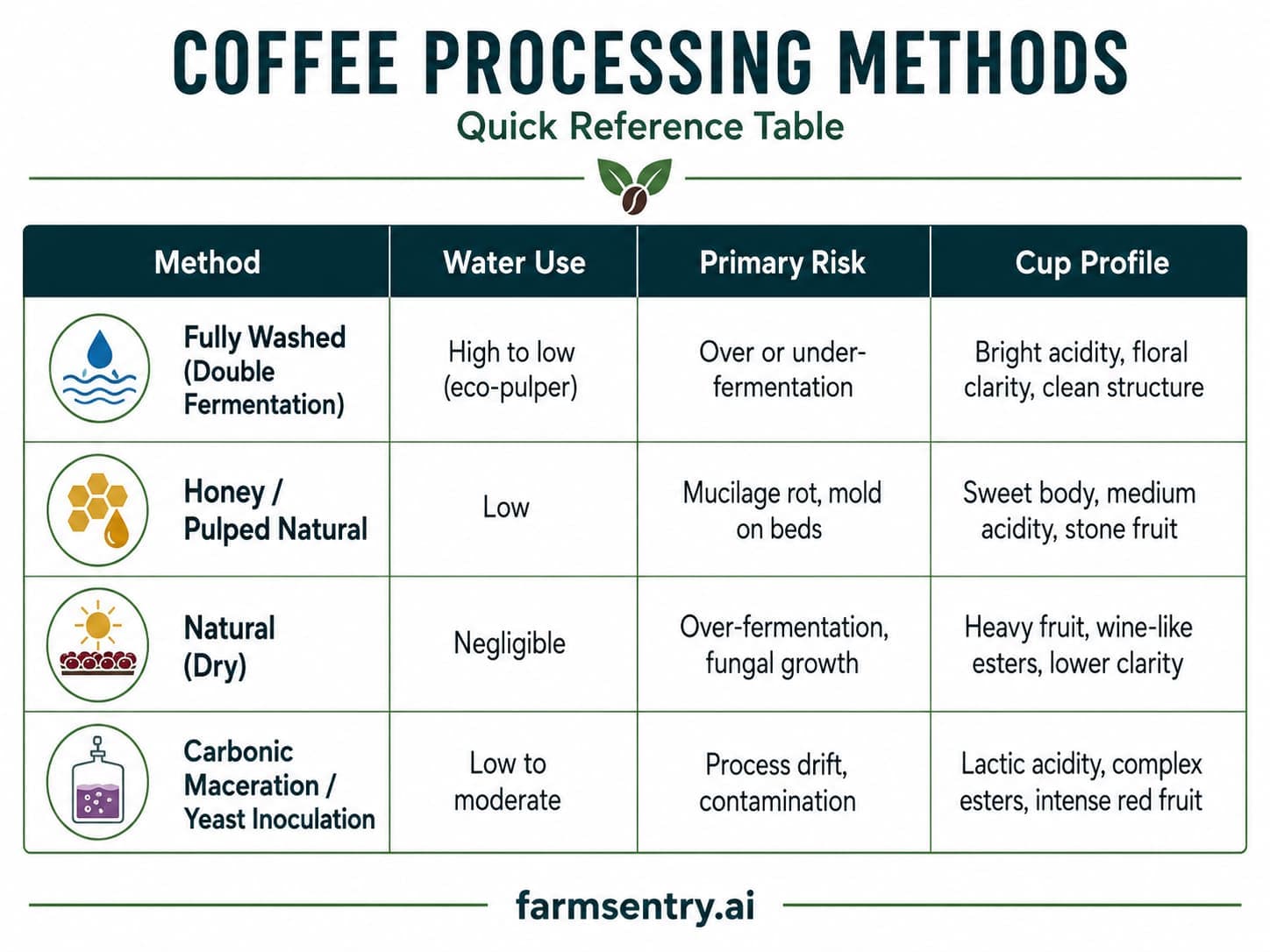
The four primary coffee processing methods wet mill facilities run today are the fully washed process, the honey or pulped natural process, the natural or dry process, and advanced controlled fermentation methods such as carbonic maceration and yeast inoculation. Each method differs in water use, infrastructure requirements, microbial risk, and the cup profile it produces.
Here’s a quick comparison to guide your planning before cherry arrives:
📊 By the Numbers: Traditional wet milling can use up to 63 liters of water per kilogram of green coffee. Modern eco-pulpers reduce this to zero to 0.2 liters per kilogram (PMC, 2024). That difference is the margin between a sustainable wet mill and one that can’t afford to operate.
✅ Best Practice: Select your processing method before cherry arrives. Your choice depends on ambient humidity, available infrastructure, water supply, and what your buyers have contracted. A rushed process decision leads to a rushed, inconsistent process.
How Does the Washed Process Work Step by Step?
The Kenyan double fermentation protocol is recognized globally as the benchmark for producing bright, structurally clean washed coffee. It breaks into six clear phases: intake and flotation, pulping, dry fermentation, intermediate washing and density grading, underwater soak, and pre-drying conditioning.
Here is the process in order:
1. Cherry Intake and Flotation Ripe cherries arrive at the station and go directly into hydraulic flotation tanks. Dense, well-developed cherries sink. Hollow, damaged, or pest-affected cherries float and get diverted to lower commercial grades. Target cherry Brix at intake of 18 to 22 degrees confirms sufficient sugar to drive healthy fermentation (FAO, 2019).
2. Pulping Sorted cherries move to a disc or drum pulper, which mechanically removes the skin and pulp from the seed. Water lubricates the machine and moves parchment through the system. In water-scarce regions, mechanical eco-pulpers such as the Penagos Ecoline operate with near-zero water input.
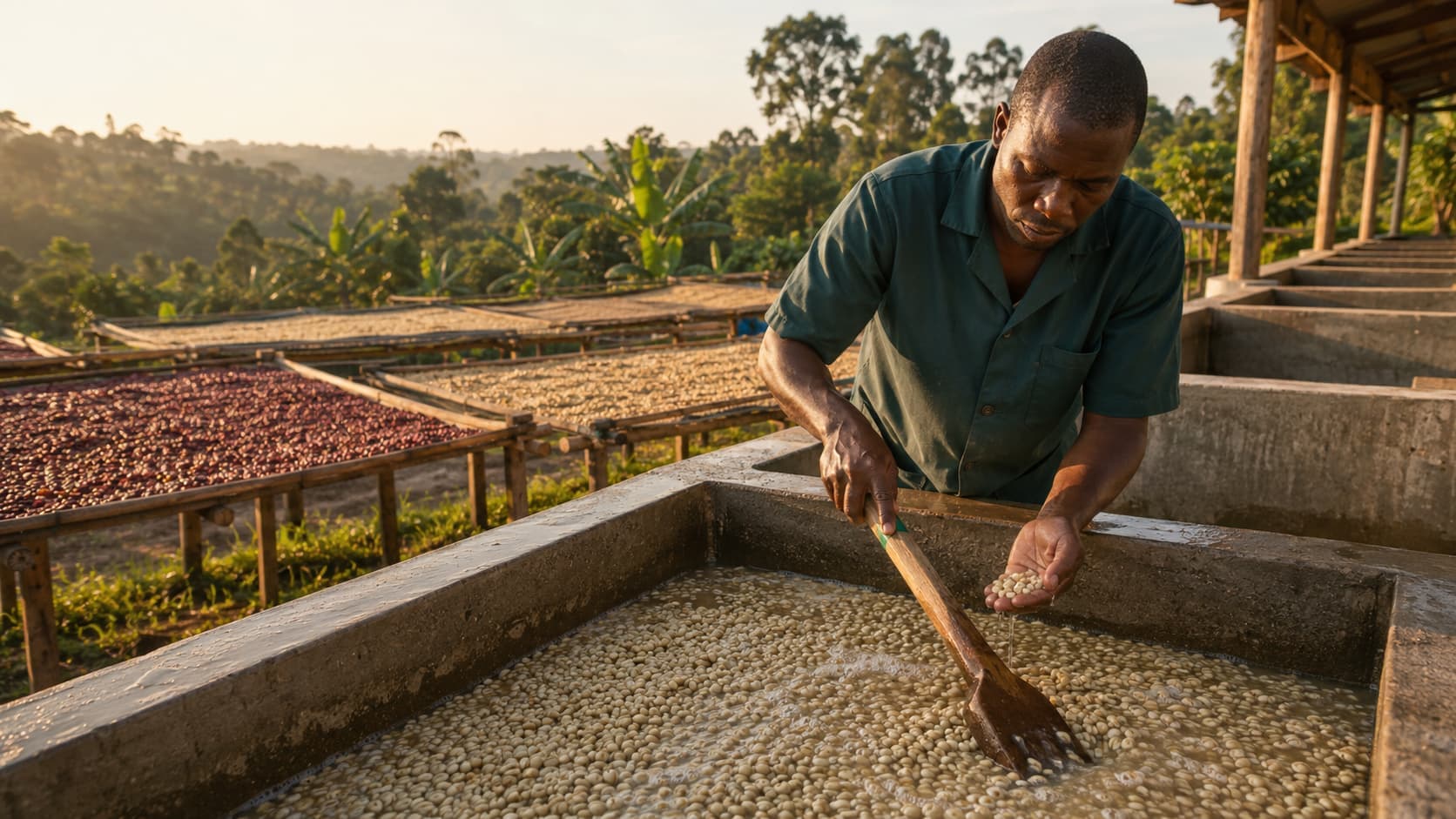
3. Dry Fermentation (Primary) Parchment enters concrete fermentation tanks without added water. Naturally occurring yeasts and pectinolytic enzymes begin degrading the mucilage layer. Duration ranges from 12 to 24 hours depending on ambient temperature. Completion test: rub parchment between your palms. When it feels gritty, not slippery, fermentation is complete.
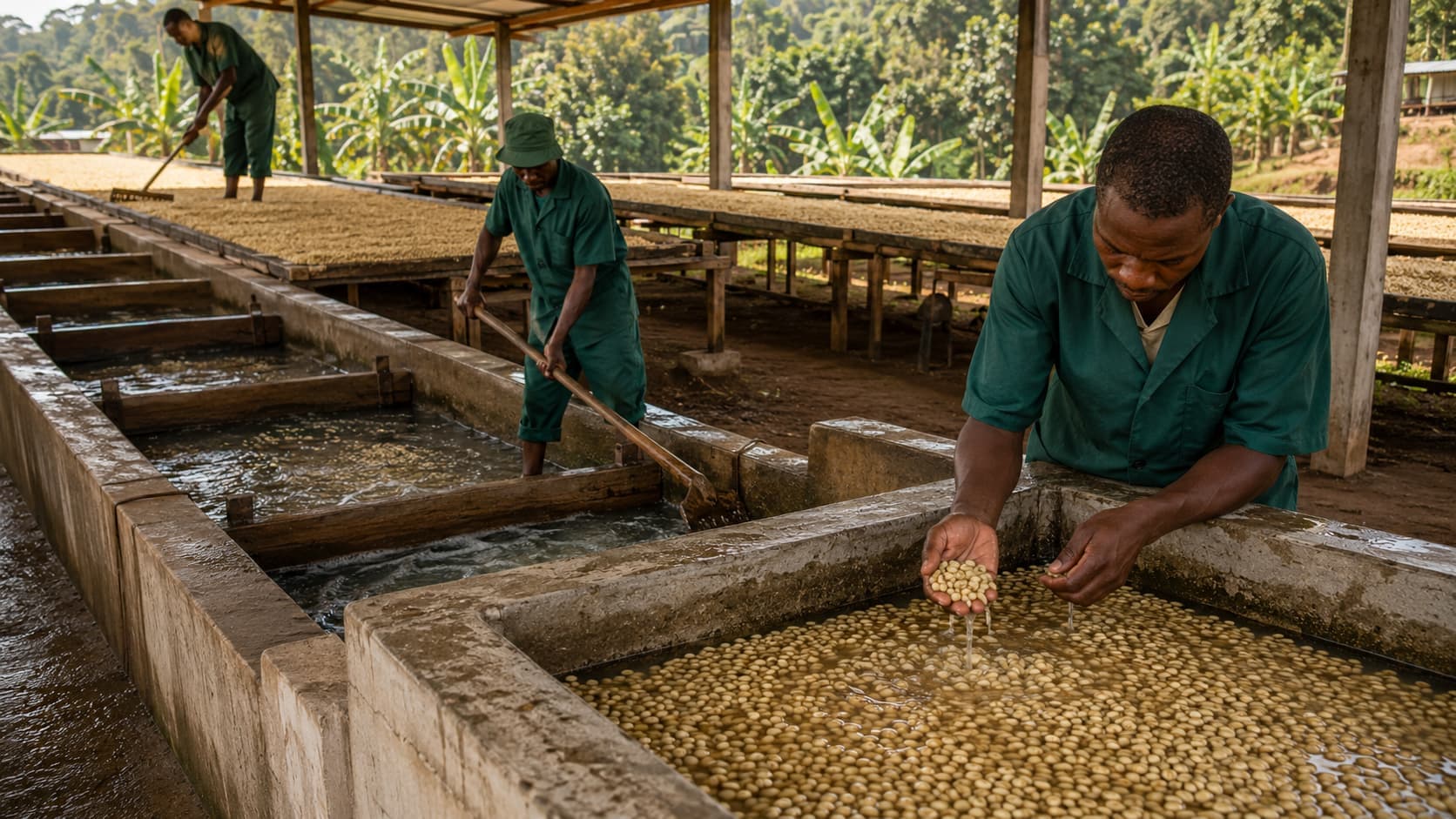
4. Intermediate Washing and Density Grading Fermented parchment is flushed through tiered washing channels. Operators use wooden paddles to strip residual mucilage. Wooden baffles capture the densest beans at Grade 1 and 2, while lighter beans at Grade 3 flow further down the channel.
5. Underwater Soak (Secondary Fermentation) The graded parchment is submerged in clean, fresh water for 12 to 24 additional hours. This phase leaches residual sugars, phenolic compounds, and degraded mucilage from the cellular matrix. Removing these precursors prevents enzymatic browning during drying and extends the characteristic brightness and structural clarity in the final cup.
6. Pre-Drying Conditioning Parchment drains and moves directly to raised African drying beds. This is the beginning of the six-stage drying process covered in detail below.
💡 Pro Tip: Monitor your fermentation tanks with a pH meter, not just a watch and your hands. Fermentation starts at pH 5.3 to 5.5. Terminate and move to washing once pH reaches 4.0 to 4.5. If you rely on time alone, ambient temperature swings will make your endpoint different on every batch.
How Do You Control Fermentation to Prevent Coffee Defects?
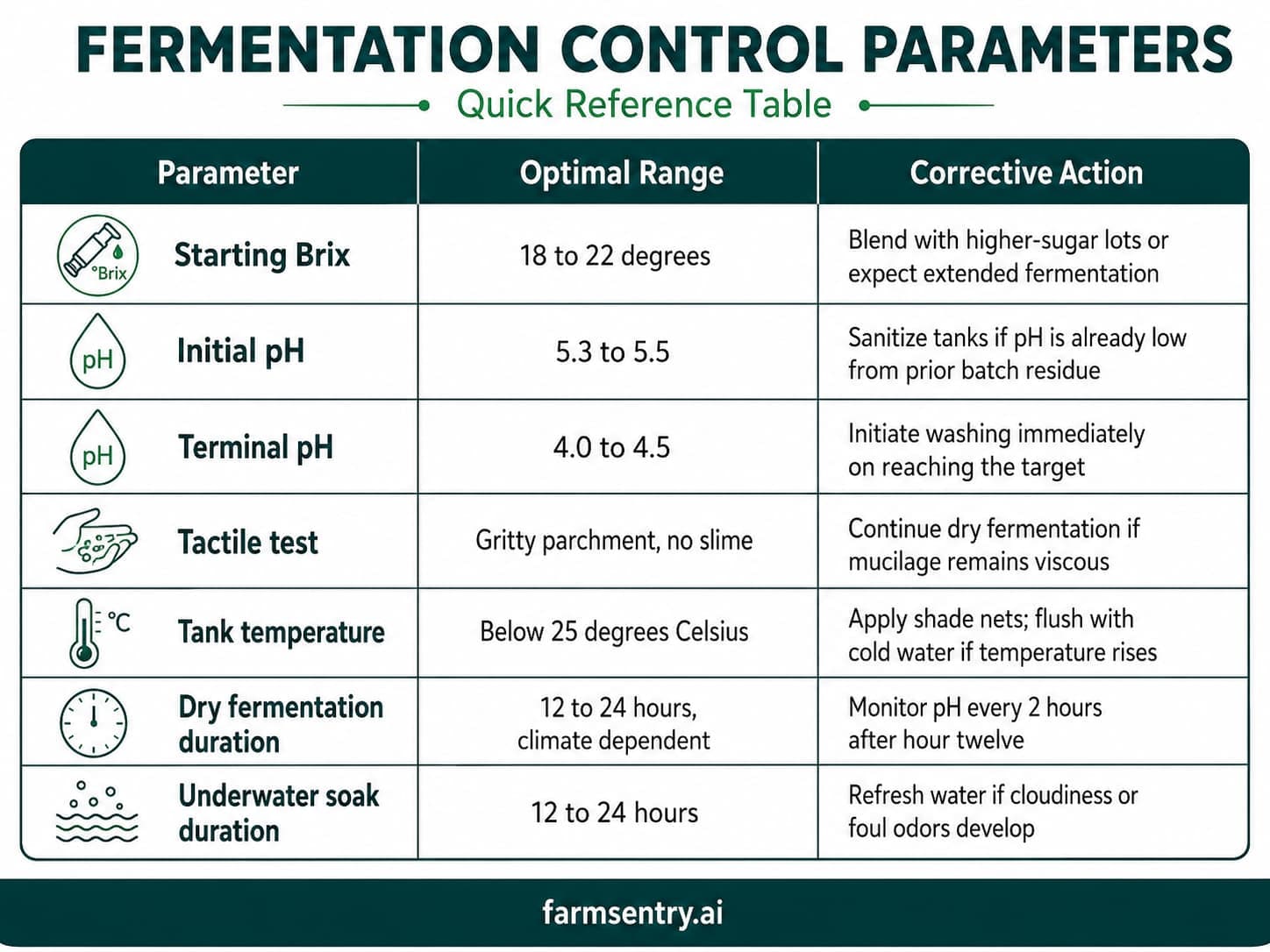
Fermentation control means monitoring pH, temperature, and time throughout the process, then acting on what you measure. Target a starting pH of 5.3 to 5.5, a terminal pH of 4.0 to 4.5, and consistent tank temperatures below 25 degrees Celsius. Monitor pH every two hours once the twelve-hour mark passes.
Fermentation isn’t just a mechanical step for removing mucilage. It’s the biochemical phase where flavor precursors are built, balanced, or destroyed. Understanding what happens inside your tanks gives you the tools to control the outcome.
The microbial sequence works like this:
Wild yeasts, including strains of Saccharomyces cerevisiae, initiate alcoholic fermentation, converting sugars into ethanol and carbon dioxide. As pH drops, Lactic Acid Bacteria (LAB) begin to outcompete the yeasts. LAB convert remaining carbohydrates into lactic acid, which drives pH down further without introducing harsh sensory defects. This is the pathway you want. Keep it on track and you get clean acidity and complete mucilage breakdown (Science Publishing Group, 2022).
Let fermentation run too long or too hot, and acetic acid accumulates rapidly. The result is a sour, vinegary defect that no amount of drying will remove.
Fermentation Control Reference Table
⚠️ Common Mistake: Relying on fixed hour counts without pH monitoring. A tank running at 28 degrees Celsius can complete fermentation in under twelve hours. The same tank at 14 degrees might need 72 hours. The pH tells you when to stop. The clock does not.
🎯 Key Takeaway: Over-fermentation and under-fermentation are both catastrophic. Under-fermentation leaves sticky mucilage on parchment, trapping moisture and inviting mold. Over-fermentation surges acetic acid production and can generate butyric and propionic acids, creating onion, vinegar, or rotting fruit defects that no downstream intervention will fix.
What Are the Six Stages of Coffee Drying and Why Does Each One Matter?
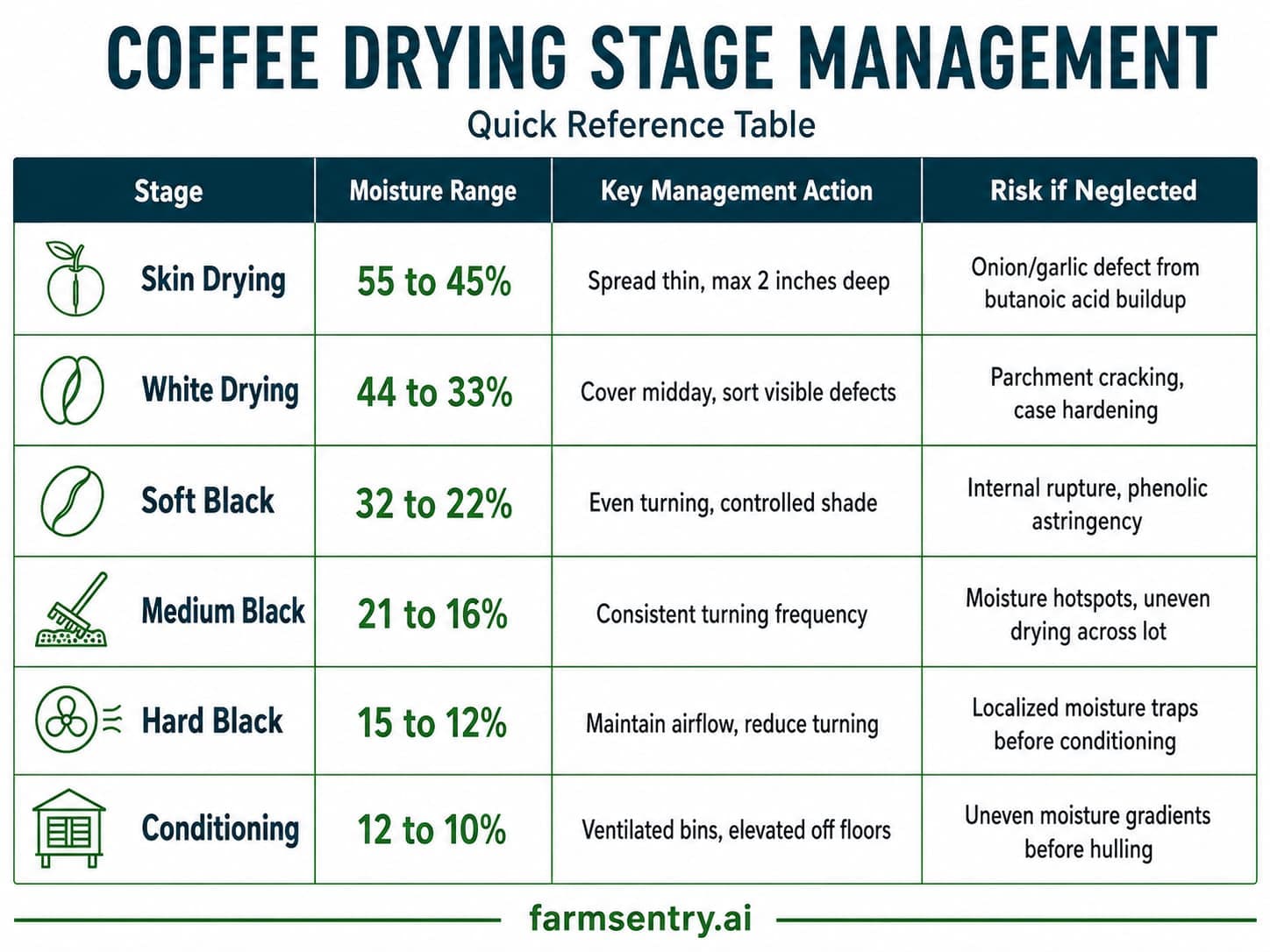
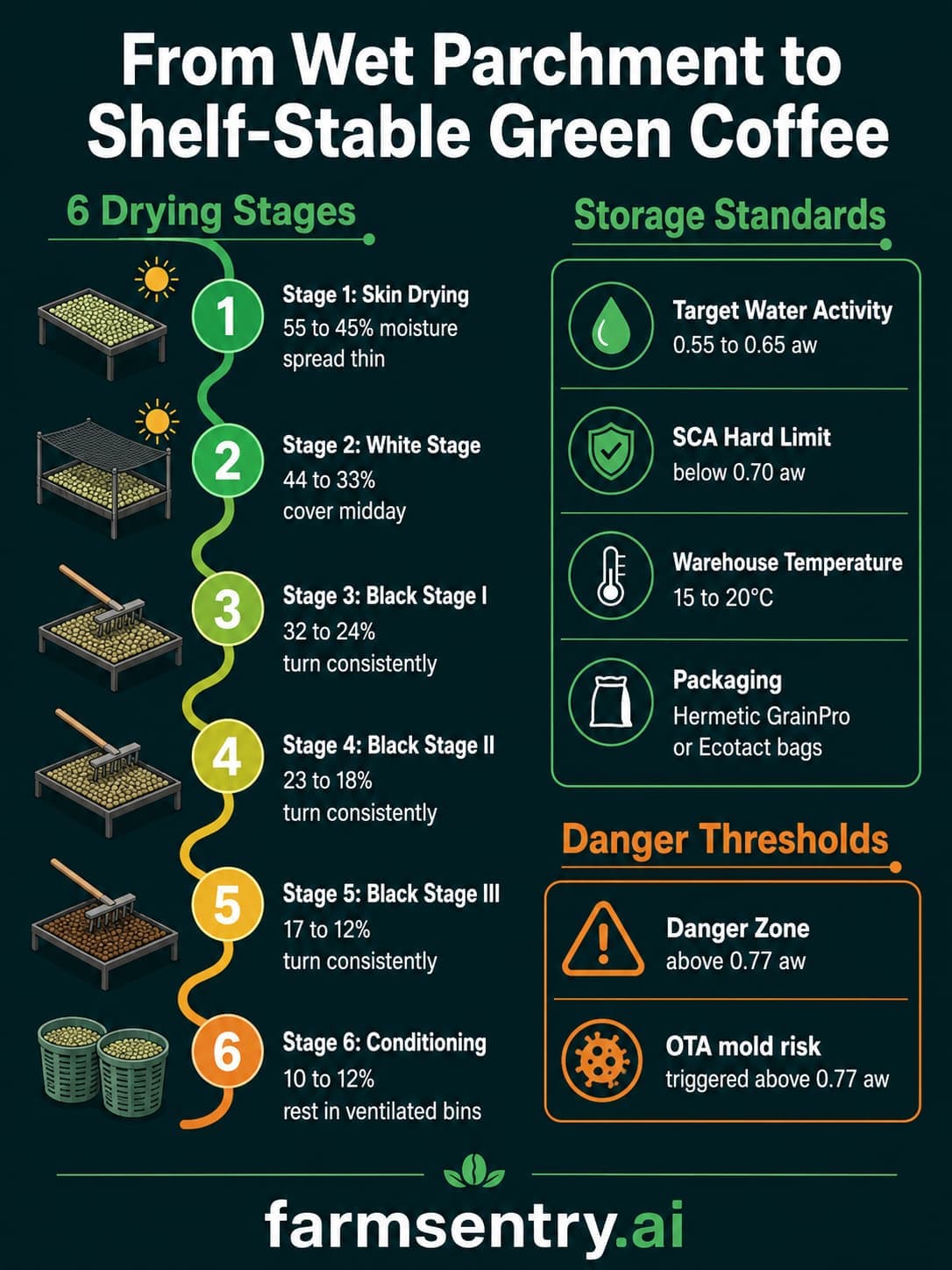
Coffee drying moves parchment from an initial moisture content of roughly 55 percent down to a stable 10 to 12 percent. Research from Kenya’s Coffee Research Institute identifies six distinct morphological stages that define the drying trajectory of washed Arabica. Each stage requires a specific management response.
Stage 1: Skin Drying (55 to 45 percent moisture) Spread parchment in a thin layer, one to two inches maximum. Wet parchment heaped during this stage creates warm, anaerobic pockets where bacteria synthesize butanoic acid. This permanently locks an onion or garlic defect into the bean before drying even begins.
Stage 2: White Drying (44 to 33 percent moisture) The parchment turns visually white and opaque. Slow the drying rate deliberately. Cover beds during peak solar radiation, typically 10:30 AM to 3:00 PM, to prevent parchment cracking from rapid surface evaporation. Hand-sort defective beans and broken parchment, which are now clearly visible against the white background.
Stage 3: Soft Black (32 to 22 percent moisture) The seed inside the parchment darkens and begins to contract. Slow, regulated moisture migration from the core to the surface is critical here. Uneven drying causes internal cellular rupture and phenolic astringency in the roasted cup.
Stage 4: Medium Black (21 to 16 percent moisture) The cellular matrix begins to solidify. Maintain your turning frequency to equalize moisture across the entire lot. Beds left untouched develop localized hotspots where the bottom layer retains moisture while the top layer overdries.
Stage 5: Hard Black (15 to 12 percent moisture) The bean is physically hard and assumes its final form inside the parchment shell. Turning frequency can reduce slightly, but airflow across the beds must continue without interruption.
Stage 6: Conditioning (12 to 10 percent moisture) Fully dried coffee moves from beds to ventilated conditioning bins or raised storage. This resting phase, lasting weeks to months depending on the season, allows internal moisture gradients to equalize throughout the lot before hulling and export grading.
Drying Stage Control Reference
✅ Best Practice: Always cover drying beds at night with polythene sheeting. Never use burlap or jute. Jute absorbs ambient moisture and imparts a distinct baggy flavor that experienced importers and cuppers identify immediately. No cupping score recovers from bagginess.
📊 By the Numbers: Coffee dried on raised African beds in full sun can move through Stages 1 to 5 in as few as 15 days in dry highland conditions, or as many as 30 days in humid lowland environments. Knowing your local drying rate by season is as important as knowing your fermentation timing.
How Should You Store Green Coffee to Protect Quality and Shelf Life?
Store green coffee at a water activity (aw) between 0.55 and 0.65, a moisture content of 10 to 11.5 percent, and a warehouse temperature of 15 to 20 degrees Celsius. Use hermetically sealed, multi-layer packaging like GrainPro or Ecotact bags. Elevate all bags off concrete floors on wooden pallets to prevent condensation transfer.
The Specialty Coffee Association sets a hard water activity limit of below 0.70 aw for specialty-grade green coffee (SCA, 2019). And here’s the thing: water activity is not the same as moisture content. Moisture content tells you how much total water is in the bean. Water activity tells you how much of that water is energetically available to support mold growth, chemical reactions, and spoilage.
Why water activity matters more than moisture content alone:
If water activity rises above 0.65, lipid oxidation accelerates. This strips the coffee of its bright aromatics and introduces woody or baggy notes. If it reaches 0.77 to 0.85, conditions become ideal for Aspergillus ochraceus, a filamentous mold that produces Ochratoxin A, known as OTA. OTA is a potent nephrotoxin and suspected carcinogen. It survives roasting temperatures. Contaminated lots face total rejection by international buyers (PMC, 2023).
Coffee is hygroscopic. It continuously seeks moisture equilibrium with its surrounding environment. Hermetic packaging breaks this cycle. A warehouse without climate control in a humid origin region will rewet your stabilized coffee within weeks of storage.
📊 By the Numbers: Water activity above 0.77 enables OTA-producing mold growth. The SCA hard limit is 0.70. Your operational target should be 0.55 to 0.65 aw, giving you a significant safety margin on both sides of the danger threshold.
💡 Pro Tip: Never rely on moisture meter readings alone once coffee is in storage. Purchase an inexpensive water activity meter and check every incoming lot and every stored lot at 30-day intervals. The meter pays for itself the first time it catches a lot trending toward the danger zone before a buyer does.
What Causes Coffee Defects and How Do You Prevent Them?
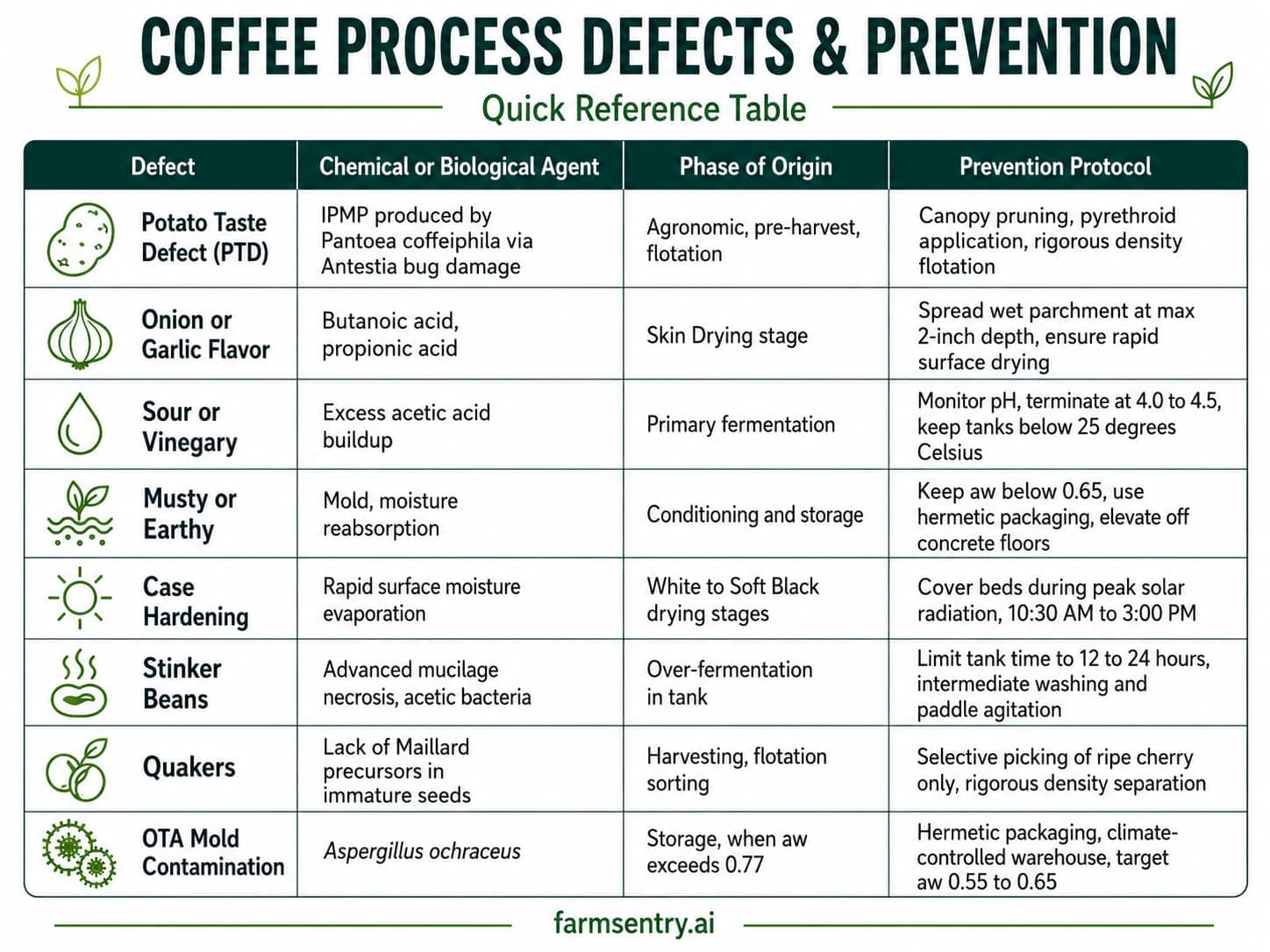
Most wet mill defects have a specific biochemical cause, a specific processing phase where they originate, and a specific prevention protocol. Understanding the cause-and-effect chain at each stage means you can step in early, before a recoverable process error becomes a permanent cup defect.
The table below is designed to be printed and kept on the processing floor.
Defect Cause and Prevention Matrix
Potato Taste Defect: A Special Case for East Africa
The Potato Taste Defect, or PTD, is devastating. It’s endemic to the African Great Lakes region, affecting cooperatives in Rwanda, Burundi, and parts of Kenya. It presents as an overwhelming raw-potato odor and flavor in both the green bean and the final cup.
The chemistry is specific. PTD is caused by the volatile compound 2-isopropyl-3-methoxypyrazine, known as IPMP. The defect is linked to the Antestia bug (Antestiopsis thunbergii), which pierces developing cherries to feed. The bug doesn’t produce the potato flavor directly. The bacterium Pantoea coffeiphila colonizes the wound the bug leaves behind and synthesizes IPMP from organic precursors inside the seed (PMC, 2019). The result is a defect that can’t be processed out once it’s in the bean. Prevention is the only strategy available.
According to World Coffee Research, aggressive post-harvest canopy pruning is the single most effective agronomic intervention. Pruning removes the shade canopy that the Antestia bug needs to thrive. Targeted pyrethroid applications applied immediately after pruning break the pest lifecycle at the farm level. At the mill, rigorous flotation and visual sorting on well-lit grading tables remain the final barriers to keeping PTD-affected beans out of premium lots.
⚠️ Common Mistake: Assuming flotation alone catches all PTD-affected beans. Lightly damaged cherries can pass flotation. Visual sorting on illuminated sorting tables adds a critical second layer of defense, especially for lots destined for export.
When Should You Choose Natural, Honey, or Anaerobic Processing?
Choose your process method based on four variables: ambient humidity during the drying season, available water supply, existing infrastructure, and what your buyers are actually purchasing. Each method requires an honest assessment of your operational capacity before cherry arrives at the mill gate.
Natural Processing Use naturals when you have an extended dry season with low ambient humidity and enough raised bed capacity to handle whole cherry without stacking. Natural processing requires 12 to 30 days of meticulous turning to prevent localized anaerobic pockets and fungal growth in the lower layers of the drying mass. The risk profile is high. The reward, when executed correctly, is heavy body, ripe fruit intensity, and winey complexity that buyers in some specialty markets actively seek.
Honey Processing Honey lots require an eco-pulper capable of removing the skin while retaining a set percentage of mucilage. The parchment bypasses fermentation tanks entirely and goes directly to drying beds. The mucilage layer caramelizes and undergoes slight controlled fermentation during drying, bridging the clean clarity of washed coffee with the sweetness of naturals.
Honey processing demands low ambient humidity. In high-humidity environments, the sticky mucilage layer promotes rapid mold growth and uncontrolled fermentation that the processor can’t manage on the drying bed.
Carbonic Maceration and Yeast Inoculation These methods require sealed stainless steel bioreactors, CO2 supply lines, pH meters, and strict sterile handling protocol. In carbonic maceration, intact cherries are loaded into CO2-purged bioreactors. The absence of oxygen forces intracellular fermentation, where enzymes within the fruit break down sugars from the inside out. The result is a high concentration of lactic acid and complex aromatic esters absorbed directly into the seed. Cup profiles are characterized by vivid red-fruit notes, bright lactic acidity, and a polished texture.
Yeast inoculation uses commercial strains like Saccharomyces cerevisiae to standardize fermentation across batches. Commercial strains outcompete wild microbes, reducing variability and defect risk. They’re particularly effective for producers whose buyers require highly reproducible specialty profiles from season to season.
🎯 Key Takeaway: Advanced processing methods can generate significant price premiums. But process drift in a bioreactor can destroy a high-value experimental lot entirely. Don’t run carbonic maceration without the infrastructure, trained staff, and sterile protocol necessary to support it consistently.
How Can Data Logging Transform Your Processing Decisions?
Let’s be honest. Most processing decisions at wet mills are made by feel. Experienced managers carry years of accumulated knowledge in their hands and noses. That knowledge is genuinely valuable. But it can’t be transferred, replicated, or reviewed after the fact.
Systematic process logging closes this gap. When you record fermentation start time, pH readings at two-hour intervals, tank temperature, termination time, washing channel grades, drying-day counts, moisture readings at each stage, and final QC cup scores, you build a dataset that speaks directly to your next harvest.
The question shifts from “What did we do last year?” to “What did we do last year, and what cup score did it produce?”
FarmSentry’s activity logging module is built for exactly this workflow. Processing teams can record lot IDs, processing timestamps, fermentation data, moisture readings by drying day, and link those inputs to quality outcomes. When this harvest’s cupping scores come back, your decisions for next season are grounded in evidence rather than memory.
For cooperative managers overseeing multiple lots and stations at once, Farmsentry multi-farm management tool let your team track processing data across different washing stations in one place. You can compare lot-level outcomes, identify which stations are consistently producing your top scores, and standardize the protocols that deliver your best results across the entire cooperative.
Wastewater and Environmental Compliance: What Every Wet Mill Needs to Know
Water is central to the washed coffee process. So is what happens to that water after you use it. Coffee effluent, sometimes called coffee honey water, carries extreme levels of Chemical Oxygen Demand (COD) and Biochemical Oxygen Demand (BOD). Discharging untreated effluent into waterways is illegal under Kenya’s NEMA Water Quality Regulations and equivalent frameworks in Rwanda, Burundi, Ethiopia, and Uganda.
The most scalable and cost-effective treatment solution at cooperative scale is constructed wetlands using Chrysopogon zizanioides, commonly known as Vetiver grass. Field-scale research published in 2025 demonstrates that mature Vetiver systems can reduce COD by up to 41 percent, BOD5 by roughly 40 percent, and suspended solids by up to 69 percent. The same systems raise effluent pH from highly acidic levels around 4.07 to near-neutral ranges of 5.82 to 6.1 (MDPI, 2025). You can review the full MDPI phytoremediation study for technical specifications applicable to your station.
The transition to eco-pulpers also reduces effluent volume at the source. Equipment operating at below 0.2 liters of water per kilogram of cherry eliminates most of the hydraulic waste stream. For mills still running traditional pulpers, combining water recirculation systems with constructed wetland treatment is the path to environmental compliance without prohibitive capital expenditure (PMC, 2024). More detail on wastewater management approaches can be found in the PMC wet processing wastewater review.
📊 By the Numbers: Untreated coffee effluent carries a COD load of up to 60,000 mg/L. That’s approximately 100 times the COD load of typical domestic sewage. Even partial treatment dramatically reduces your environmental impact and your legal exposure.
Conclusion and Action Plan
The quality of your green coffee is determined by decisions made in the wet mill, on the drying beds, and in the storage warehouse. Every step carries defined parameters. Every deviation from those parameters has a known consequence. The difference is whether you’re acting on that knowledge or guessing.
Key Takeaways:
Terminate fermentation at pH 4.0 to 4.5, not by the clock. Temperature fluctuations make time-based endpoints unreliable and inconsistent across batches.
Spread wet parchment at a maximum two-inch depth during the Skin Drying stage. Heaping at this phase permanently locks in onion and garlic defects before the sun even starts working.
Store green coffee below 0.70 aw and between 0.55 and 0.65 aw for optimal shelf stability. Hermetic packaging is not optional in humid warehouse environments.
Implementation Roadmap:
This week: Purchase a pH meter and a water activity meter. These are the two instruments that protect quality at the two highest-risk stages, fermentation and storage. Both generate immediate, actionable readings that remove guesswork from your most critical decisions.
This season: Log every lot’s fermentation times, pH readings at two-hour intervals, drying-day counts, and moisture readings by stage. Record the lot ID and link it to the cupping score when it comes back from the QC table.
Next harvest: Use last season’s data to set your fermentation and drying protocols by lot, variety, and ambient conditions. Let the data tell you what your best-scoring lots had in common. Replicate that.
For teams ready to build a structured data loop from processing floor to QC report, FarmSentry’s reporting tools let you generate lot-level processing reports and export them for quality review with your buyers, dry mill partners, or cooperative board.
“The difference between a specialty score and a commercial score is often not the cherry. It is the thirty hours between pulping and the drying bed.”
References
FAO. (2019). Annex 5: Coffee post-harvest handling and processing in Kenya. Food and Agriculture Organization of the United Nations. Available at: https://www.fao.org/4/x6939e/X6939e11.htm [Accessed: 1 June 2025].
MDPI. (2025). Field-scale phytoremediation of coffee wastewater using Vetiver grass. Water, 18(6), 670. Available at: https://www.mdpi.com/2073-4441/18/6/670 [Accessed: 1 June 2025].
PMC. (2019). Microbial identification of Potato Taste Defect from coffee beans. PubMed Central, National Institutes of Health. Available at: https://pmc.ncbi.nlm.nih.gov/articles/PMC6341129/ [Accessed: 1 June 2025].
PMC. (2023). Effect of green and roasted coffee storage conditions on selected characteristic quality parameters. PubMed Central, National Institutes of Health. Available at: https://pmc.ncbi.nlm.nih.gov/articles/PMC10119118/ [Accessed: 1 June 2025].
PMC. (2024). Waste water management in wet coffee processing mills. PubMed Central, National Institutes of Health. Available at: https://pmc.ncbi.nlm.nih.gov/articles/PMC11181887/ [Accessed: 1 June 2025].
Science Publishing Group. (2022). A review of coffee processing methods and their influence on aroma. International Journal of Food Engineering and Technology, 6(1). Available at: https://article.sciencepublishinggroup.com/pdf/ijfet.20220601.12 [Accessed: 1 June 2025].